
Buying & Sourcing Guide
Why Cheap LED Headlight Bulbs Die Early: Heat, Fans and Drivers — and How Distributors Can Stop the Returns
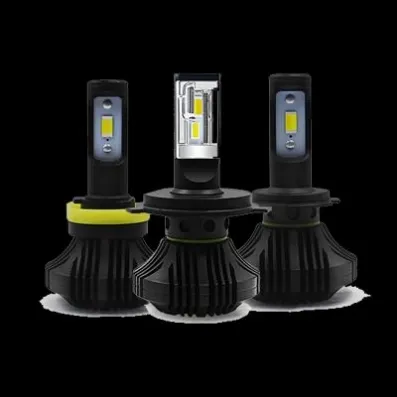
The short answer: the LED chip itself almost never dies first. What kills a cheap bulb is heat the body cannot shed and a driver built from the cheapest parts on the shelf. If you buy on price alone, you are not buying a cheaper bulb — you are buying your next round of returns, complaints and warranty claims. The fix is not a higher wattage number on the box. It is a cooling design that survives a sealed housing, a driver that holds steady voltage, and a supplier who puts the warranty in writing.
Picture the scene every distributor knows too well. You move 200 sets of a bargain bulb in six weeks. The price was right, the first installs looked bright, and your retail customers were happy — for about a month. Then the messages start. One side goes dim. Another flickers at idle. A third is dead outright, six weeks after install. Your shop customers want replacements, your end users want refunds, and the factory that sold you the bulbs has stopped answering, or offers you a discount on your next order instead of a fix. The bulbs did not fail because LED technology is fragile. They failed because three cheap decisions were baked in before the box was ever sealed.
The chip is the last thing to die
An LED headlight bulb is a small system, not a single part. The chip makes the light, but the heat sink carries heat away from it, the fan — if there is one — moves air across that sink, and the driver feeds the chip a steady current. When any one of those supporting parts gives up, the whole bulb goes dark, even though the chip itself was fine.
Heat is the first enemy. An LED chip runs hot at the semiconductor junction, and heat that cannot escape degrades the chip, the phosphor coating and the driver electronics around it. Industry guidance often cited by lighting engineers puts it bluntly: for every 10 degrees Celsius above the rated junction temperature, LED life can fall by roughly half. A bulb that survives on a test bench in open air can cook itself inside a sealed headlight housing on a summer afternoon. That is why a bulb's cooling design matters more than the number printed on its box — and why "it looked bright in the shop" tells you nothing about whether it will still be working in three months.
Four ways a cheap bulb cooks itself
First, the heat sink is too small, or made of the wrong material. Good bulbs use a finned aluminum body with real surface area, sometimes with copper elements to pull heat away from the chip. Cheap bulbs shrink the sink to save metal, or use plastic fins that barely conduct heat at all. The result is a bulb that feels fine for the first ten minutes and then runs hotter and hotter until the driver starts to throttle, the output fades, or a component gives up entirely.
Second, the fan is a wear item nobody budgets for. A small cooling fan is a moving part sitting inches from road dust, moisture and engine heat. In a cheap bulb the fan is often the lowest-cost motor the factory could source, with a sleeve bearing that dries out and seizes. When the fan stops, temperatures climb fast — and the customer usually notices only when the bulb is already dead. This is the single most common failure pattern behind "it worked great for a month" stories. It is also why fanless designs have become a real buying criterion rather than a gimmick: a K9 fanless bulb has no fan to clog, seize or buzz, because its cooling is a passive aluminum heat sink. Fewer moving parts means fewer ways to fail, and no fan noise for the driver to complain about. Our earlier comparison of fan vs fanless bulbs walks through the trade-off in detail.
Third, the driver is built from the cheapest capacitors available. The driver converts your vehicle's voltage into the steady low-voltage current the chip needs. Budget drivers use undersized capacitors and thin circuit boards that degrade quickly under voltage swings. A driver that cannot hold steady current is also the bulb that flickers at idle or throws a dashboard bulb-out warning — problems we covered in our flickering guide and our CANbus decoder guide. In the SUNRISE range the split is deliberate: HTD series bulbs carry the driver built in, while the HT series uses a separate external decoder driver, so the heat of the driver and the heat of the chip are not stacked in the same housing.
Fourth, the bulb is installed where heat has nowhere to go. A tight housing, a dust cover that will not close, or a sealed fog lamp traps hot air around the bulb. Some buyers solve this by leaving the dust cover off — and then blame the bulb when moisture gets in. The honest answer is that fitment is part of the product: a true 1:1 mini-size bulb that fits behind the original dust cover keeps both the heat path and the seal intact. If a bulb only fits with the cover removed, it is the wrong bulb for that car, no matter how bright it looks on the bench.
The "too bright on paper" trap
Walk through any online marketplace and you will find listings claiming 80,000 or 90,000 lumens from a bulb the size of your thumb. Those numbers are not measured output; they are marketing. A distributor who buys on the biggest number on the listing is buying the fastest route to a disappointed customer, because the customer will compare the bulb against the claim, not against a halogen. When the real output does not match the box, the return comes back with "not as bright as claimed" written on it.
The same inflation applies to lifespan. Listings that promise decades of life are quoting laboratory extrapolations, not real-world use. No responsible supplier should promise you an hour count for a bulb that will live in a dusty engine bay in a tropical climate. What a supplier can promise — and what actually protects you — is a warranty in writing. SUNRISE backs its bulbs with an 18-month warranty. That is a real commitment, not a laboratory number, and it is the figure your own customers can hold you to.
A six-point check before you order a batch
You do not need a laboratory to avoid most early-failure bulbs. Ask these six questions before you place a trial order, and judge the supplier by how fast and how specifically they answer.
One: what is the heat sink made of, and how big is it? Aluminum fins with real surface area, or a stubby plastic body? Ask for a photo of the bare bulb next to a ruler, not a rendered lifestyle shot.
Two: if it has a fan, what kind of bearing, and what happens when the fan stops? A supplier who cannot answer this has not tested it. Fanless options remove the question entirely.
Three: is the driver built in or external, and is it constant-current with surge protection? The driver is the most common point of failure in cheap bulbs. "Built-in" versus "external" is not a quality ranking by itself — what matters is that the design keeps driver heat away from chip heat, and that the supplier will say so in writing.
Four: does it fit behind the original dust cover? A 1:1 mini-size body is the difference between a clean install and a housing left open to dust and moisture. Ask for the installed length, not just the overall length.
Five: what does the warranty actually cover, and for how long? A warranty that only covers "manufacturing defects" with no time limit stated is not a warranty. Get the months and the claim process in writing before you pay.
Six: can you test a small batch first? A supplier confident in their cooling and driver design will welcome a small trial order. At SUNRISE, in-stock items in neutral color boxes start at 50 sets, so you can put a batch through your own installers and your own climate before committing to a larger volume or a private-label run.
What to stock if you want fewer returns
If your market is mostly daily drivers in hot climates, start with the designs that remove failure points rather than adding features. A fanless bulb such as the K9 suits customers who drive in dusty conditions or who simply do not want a fan humming behind the headlight — one less moving part, one less warranty claim. For vehicles that originally ran HID, the HTD series replaces the whole D-series range — D1S, D2S, D3S, D4S, D5S and D8S — with a built-in driver, so there is no separate ballast to fail and no external box to mount. And for tight housings, a compact mini-size body such as the HT8 Mini fits where larger fan-cooled bulbs will not close the dust cover. Pair any of these with a CANbus decoder only where the vehicle actually needs one — our decoder guide explains when an external decoder is required and when it is not — instead of fitting decoders to every install by default.
FAQ
How many sets do I need to order to try your bulbs?
In-stock items in neutral color boxes start at 50 sets. That is a trial quantity, not a private-label commitment: logo printing is free from 100 sets, and custom color boxes start at 1,000 sets with a small additional cost of $0.50 per set.
Can I get samples before a bulk order?
Yes. Send us your model list or target vehicles and we will confirm which sizes fit and arrange samples. Samples are the fastest way to test cooling and fitment in your own market conditions.
How fast is delivery?
In-stock items ship within one week. If an item is not in stock, production after deposit is normally 20–30 days, and custom packaging timelines are agreed in writing before you order.
Do I need a CANbus decoder with every bulb?
No. Many vehicles run fine without one. A decoder is needed when the vehicle reports a bulb-out warning or the bulb flickers because of the car's monitoring system. The HT series uses an external decoder driver, while HTD bulbs have the driver built in.
What is the warranty?
18 months. If a bulb fails within the warranty period under normal use, talk to us with the batch details and we will handle it under the warranty terms.
Do you make HID conversion kits?
No. SUNRISE only makes LED upgrade bulbs. For vehicles that originally used HID, the HTD series is the LED replacement for the D-series socket — it fits the original socket without an HID ballast.
The cheapest bulb is the one you only sell once
Early failure is not bad luck. It is a design decision made by someone else, paid for by you, weeks after the sale. The distributors who sleep well are not the ones who found the lowest price — they are the ones whose bulbs are still working when the customer comes back for the second car. Test the cooling, test the driver, test a small batch, and buy from a supplier who puts the warranty in writing.
Send us your model list or your target vehicles — H11, 9005, 9012, H4, H7 or D-series — and we will send back a quotation and samples for the sizes that fit. WhatsApp: +86 173 6284 6689. Email: sherry@chuxuparts.com.