
Installation & Troubleshooting
LED Headlight Flickering: 7 Causes and How to Fix Each One
Most LED headlight flicker after an install is not a dead bulb — it is the car reacting to a load it did not expect. Modern vehicles check their bulbs
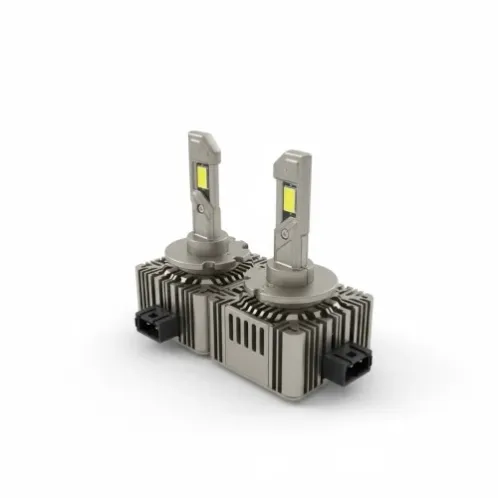
Most LED headlight flicker after an install is not a dead bulb — it is the car reacting to a load it did not expect. Modern vehicles check their bulbs with electrical pulses, run daytime lights at reduced voltage, and warn the driver when a bulb draws less power than a halogen. Any of those can make a healthy LED flicker, and each cause has a distinct symptom signature. Work through the seven causes below in order: match the signature first, then apply the fix. Guessing in the wrong order is how good bulbs get returned and bad installs get repeated.
1. Is your car's bulb-check system pulsing the LED?
Symptom signature: A regular, rhythmic flicker or strobe, often most visible at idle or in the first seconds after start-up, usually identical on both sides. It may pair with a dashboard bulb-out warning.
What is happening: The car's ECU sends short test pulses (PWM) to verify the bulb is intact. A halogen filament smooths these pulses out; an LED reacts instantly, so you see them.
Fix: Fit a CANbus decoder (also sold as an anti-flicker harness) between the car and the bulb to smooth the pulses and present the expected load. On SUNRISE HT-series bulbs the decoder is an external, separate driver unit — it is a planned part of the system on sensitive vehicles, not an admission of a faulty bulb. TheHTD D Series is different: its driver is built in, and no external decoder is needed.
2. Does the flicker only happen in daytime running light (DRL) mode?
Symptom signature: The bulbs flicker or strobe as daytime running lights but burn steadily when you switch the full headlights on.
What is happening: Many cars run the DRL circuit at reduced voltage. The LED driver, designed for full voltage, keeps starting and cutting out at the lower supply — the classic flicker-in-DRL-mode complaint from buyer reviews.
Fix: Check the bulb's rated voltage range on its spec sheet and confirm the DRL supply falls inside it. If it does not, the reliable fixes are a decoder specified for DRL use, or running the LEDs on the full headlight circuit rather than the DRL circuit. Do not "fix" this with a brighter bulb — voltage, not brightness, is the problem.
3. Does the flicker come and go over bumps or when you touch the harness?
Symptom signature: Random, irregular flicker that changes when the car vibrates, goes over bumps, or when you wiggle the wiring. Often one side only.
What is happening: A loose connector, a corroded pin, or a weak ground gives the bulb an unstable supply. The driver cuts in and out exactly as the contact does.
Fix: Switch off, reseat every connector until it clicks, and inspect the pins for corrosion or bent contacts. Check the ground point. This is the cheapest cause on the list and the most commonly misdiagnosed as a bulb failure — always rule it out before returning anything.
4. Did the flicker start — or get worse — after a decoder was fitted?
Symptom signature: Flicker that began with a decoder install, or a decoder that runs very hot, sometimes with flicker that worsens as the drive goes on.
What is happening: The decoder is failing, overheating, or mismatched to the vehicle — wrong load rating, or a generic unit that does not suit the car's check system. Two different decoders on the same car can also fight each other.
Fix: Fit one correctly rated decoder per side, from the bulb supplier where possible, mounted where it gets airflow. If you are specifying stock for resale, note the distinction that matters: HT-series bulbs take an external decoder; HTD bulbs have the driver built in, which removes this failure point entirely on D-socket cars.
5. Does the flicker start after 20–30 minutes of driving?
Symptom signature: Perfect light at start-up, then flicker, dimming, or cycling once everything is hot — worse in summer and in slow traffic.
What is happening: The driver is overheating and throttling or shutting down to protect itself, then recovering and repeating. A failed cooling fan produces the same pattern.
Fix: Check that the bulb's cooling fan spins freely and that the dust cover and housing leave the airflow path the design expects. If fan failure is the pattern, a fanless design removes the failure point altogether — the SUNRISE K9 (60W, 6,500LM, DC 9–30V) has no fan, which also means no fan noise or buzzing in the cabin. Heat-related flicker is a specification problem, so solve it at the buying stage, not with a third replacement bulb.
6. Has one side flickered since the moment of installation?
Symptom signature: One side flickers or cuts out from the very first switch-on, while the other side is perfect, and swapping bulbs moves the problem with the bulb — or it stays with the side.
What is happening: Seating or polarity. An LED bulb that is not fully seated in its socket, or a connector reversed on a polarity-sensitive installation, delivers intermittent or wrong-way power. Poor seating also wrecks the beam pattern, which is why this cause often arrives together with complaints about glare.
Fix: Remove the bulb, check the connector orientation, reseat it firmly in the socket, and confirm the LED chips sit at the 3 o'clock and 9 o'clock positions. If the problem follows the bulb after a side swap, that specific unit is faulty — a warranty case, not an install case.
7. Did the bulbs flicker from day one, on every vehicle they were tried in?
Symptom signature: The same flicker across different cars, including cars with no bulb-monitoring system at all.
What is happening: The driver's design itself. Low-cost drivers skip proper constant-current regulation and input filtering, so ordinary voltage ripple from the alternator passes straight through to the LEDs. No decoder fully cures a driver that cannot regulate its own supply.
Fix: This is a purchasing decision, not an installation step. Specify bulbs with a properly engineered driver, verify with a golden sample in your most sensitive vehicle model before ordering in quantity, and judge suppliers on their warranty — SUNRISE backs its range with an 18-month warranty — rather than on headline lifespan claims of 50,000–80,000 hours, which independent reviewers contrast with a realistic 15,000–30,000 hours for honest products.
Do you actually need a CANbus decoder, or not?
You usually need one when the car has bulb monitoring: a dashboard warning, PWM flicker, or DRL flicker on a monitored circuit are the three tells. You usually do not need one on older vehicles without bulb checking, or when the bulb's driver is built in — the HTD D Series integrates the driver precisely so D-socket conversions need no external decoder box inside a tight headlight housing. The honest summary: a decoder is a normal system component for externally-driven bulbs like the HT series, not a patch for a defective product, and no responsible supplier will promise that any bulb works with 100% of vehicles. If a seller guarantees zero errors on every car, that is marketing, not engineering.
FAQ
Why do my LED headlights only flicker at idle?
At idle the alternator output is at its lowest and the car's bulb-check pulses are most visible to an LED. If the flicker is rhythmic and on both sides, treat it as cause 1 (PWM) and fit decoders.
Will a CANbus decoder also fix the dashboard bulb-out warning?
Usually, yes — the warning and the flicker are often the same root cause: the car reading an unexpected load. A correctly rated decoder addresses both. If the warning persists with a decoder fitted, the decoder is mismatched or failing (cause 4).
Can flickering damage the bulb or the car?
Sustained flicker from a power problem stresses the LED driver and shortens its life, and a flickering headlight is a safety and inspection problem in itself. Find the cause rather than living with it.
Why does only one side flicker?
Because most causes are local: one loose connector, one failing decoder, one badly seated bulb (causes 3, 4 and 6). Swap the bulbs side to side — if the flicker moves, it is the bulb; if it stays, it is the car side.
Do fanless bulbs flicker less?
Flicker is an electrical and driver issue, not a fan issue. A fanless bulb such as the K9 removes fan noise, buzzing and fan failure — including the heat-throttling pattern a dead fan causes — but PWM or DRL flicker still has to be solved at the circuit level.
Still chasing a flicker on a specific model, or specifying bulbs for resale and want the decoder question settled before you order? Tell us the vehicle or the socket and we will match the bulb and driver combination — samples are available quickly. Contact us through the site or on WhatsApp: +86 173 6284 6689.