
Product Knowledge
Fan vs Fanless LED Headlight Bulbs: Noise, Failure Points and Which One Your Customers Actually Want
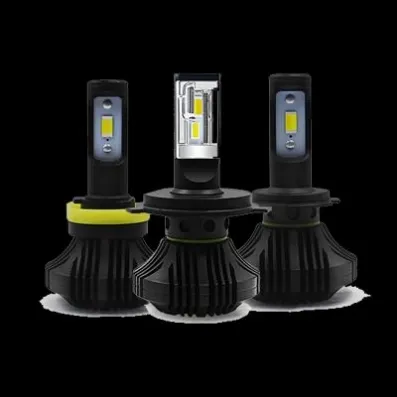
Fan vs Fanless LED Headlight Bulbs: Noise, Failure Points and Which One Your Customers Actually Want
The complaint comes back to the distributor, not to the factory. A customer fits a new pair of LED headlight bulbs, drives home happy — and then notices it. A faint whirring from behind the headlight, audible every time the engine is off and the lights are on. Or worse: three months later one side goes dim, then dark, and the customer is back at the counter demanding a replacement. The bulb did not fail because the LED chip was bad. It failed because the tiny fan inside it stopped spinning, the heat had nowhere to go, and the driver cooked itself.
This is the argument your customers are already having online, and it is the argument that decides which bulbs a distributor should stock. Fan-cooled LED bulbs promise maximum cooling in a small package. Fanless LED bulbs promise silence and one less moving part to break. Both claims are true. Both are also incomplete. This guide breaks down how each design actually works, where each one fails, and how to match the right design to the right customer — so the bulbs you ship stay sold instead of coming back.
Why LED headlight bulbs need cooling at all
An LED chip turns most of its electricity into light, but a meaningful share still becomes heat — and that heat is concentrated on a chip the size of a fingernail. Left unmanaged, the temperature climbs, the light output drops, the colour shifts, and the electronics age far faster than they should. Every LED headlight bulb is therefore a cooling design first and a lighting design second. The question is only how the heat gets out.
Fan-cooled bulbs use a small high-speed fan, usually built into the base of the bulb, to force air across a heatsink. Fanless bulbs use a larger passive heatsink — braided copper belts, aluminium fins, or a solid heat pipe — and rely on the air already moving inside the engine bay. The difference sounds simple. In practice it changes the noise, the size, the failure pattern and the kind of customer who will be happy with the bulb.
The fan-cooled bulb: strong cooling, with a moving part
A fan is the most effective way to move heat out of a small space, which is why most high-power LED bulbs use one. When the fan works, a fan-cooled bulb can sustain high output in a compact body. That is the design's real advantage, and it is why the highest-output bulbs on the market are almost all fan-cooled.
The weakness is exactly what it sounds like: the fan is a moving part, and moving parts wear out. Dust, moisture and engine-bay heat all shorten a small fan's working life, and when the fan slows down or seizes, cooling collapses quickly. The bulb may keep working for a while at reduced output, then fail outright — often on one side only, which is the most visible failure a customer can experience. The second weakness is noise. A small fan spinning at high speed produces a whine that is easy to ignore on a highway and impossible to ignore in a quiet car park with the engine off. Review sections and buyer forums are full of this complaint: "fan noise" is one of the most repeated criticisms of fan-cooled LED bulbs, and it is a complaint a distributor hears about bulbs they did not design and cannot fix.
That does not make fan-cooled bulbs a bad product. It makes them a product with a defined use case: customers who want maximum output, who drive vehicles with room behind the headlight, and who accept a small fan as the price of that output. For those buyers, a well-built fan-cooled bulb with a quality fan and a real warranty is the right recommendation. For everyone else, the fan is a risk the customer did not ask to take.
The fanless bulb: silent, simpler — and honest about its limits
A fanless LED bulb has no fan, no whirring, and no small motor to seize. The cooling is entirely passive: heat travels from the chip into a heatsink — often flexible copper belts that can be folded into the space behind the headlight, or a finned aluminium body — and dissipates into the surrounding air. The result is a bulb that is silent by design and has one entire category of failure removed. There is no fan to clog with dust, no bearing to wear out, and no noise complaint waiting in the customer's driveway.
Buyers have noticed. Fanless designs are now a recognised preference in the market: roundups of the best fanless LED headlight bulbs for November 2026 feature fanless models from the major retail brands, and wholesale reports describe fanless and compact designs as a growing line alongside high-power fan-cooled models, with buyers explicitly valuing silence and simpler installation in tight housings. The appeal is practical as much as emotional — a fanless bulb is typically a 1:1-sized bulb that fits behind the dust cover without modification, which removes the other great source of returns: bulbs that are simply too big for the housing.
The honest limit is thermal headroom. Passive cooling cannot move as much heat as a fan in the same volume, so a fanless bulb will generally be built to a more moderate power level than its fan-cooled equivalent. That is not a flaw; it is a trade. For most daily-driven cars — commuters, family SUVs, delivery vehicles, the fleets and retail customers who make up a distributor's volume — a well-designed fanless bulb delivers the light they need with the reliability they actually notice. For a customer chasing maximum output for an off-road build or a show car, the fan-cooled design still has a case to make.
Fan vs fanless: a side-by-side decision table
| Fan-cooled LED bulb | Fanless LED bulb |
|---|---|---|
Noise | Audible fan whir, noticeable with engine off | Silent — no moving parts |
Failure points | Fan wear, dust and moisture ingress, bearing failure | Fewer: no fan to fail; heat depends on heatsink design |
Cooling capacity | Higher — fan forces air across the heatsink | Moderate — passive dissipation, sized to the bulb |
Size and fitment | Often bulkier base; may not fit behind dust covers | Usually compact 1:1 size; fits tight housings |
Best for | Maximum-output builds, open housings, enthusiasts | Daily drivers, fleets, quiet vehicles, tight housings |
Typical complaint | "Fan noise" / one side died after months | Lower peak output than fan-cooled equivalents |
Distributor risk | Fan failures drive warranty claims | Lower, if the heatsink is properly engineered |
How to tell a good fanless bulb from a cheap one
Fanless is not a magic word. A bad fanless bulb — a small heatsink, thin copper, poor thermal contact between chip and heatsink — will overheat just as surely as a fan-cooled bulb with a dead fan, and the failure will look the same to the customer. When you evaluate a fanless bulb for your range, check four things before you order.
First, look at the heatsink. It should be substantial: thick braided copper belts or deep aluminium fins, not a thin strip. The heatsink is the entire cooling system, so its size and material are the specification that matters most. Second, check the power rating against the heatsink. A fanless bulb claiming very high wattage on a small heatsink is a bulb that will run hot — treat inflated power claims with suspicion and ask for the measured figures. Third, check the driver. A fanless bulb still needs a driver that handles voltage swings and, on many vehicles, CANbus communication. SUNRISE splits this honestly: the HT series uses an external, independent decoder driver for CANbus, while the HTD series builds the driver in — so you can match the decoding solution to the vehicle instead of hoping one design fits all. Fourth, check the warranty behind the claim. An 18-month warranty on a fanless bulb is a real commitment, because it covers the period in which a bad thermal design would actually show up.
Matching the design to your customers
The stocking decision is not fan versus fanless in the abstract. It is which customer is standing in front of you.
Recommend fanless when the customer drives a daily car, a family SUV or a fleet vehicle; when the housing is tight and the dust cover must close; when the customer has complained about noise before, or drives an electric or hybrid vehicle where cabin quiet matters; and when the buyer is a retailer who needs a low-return, easy-to-explain product. The SUNRISE K9 is built for exactly this customer: a fanless design with a 60W rating, DC 9–30V operation that covers both 12V cars and 24V trucks, and a compact body that fits where fan-cooled bulbs cannot.
Recommend fan-cooled when the customer wants the highest output available, has room behind the headlight, and understands they are buying a performance part with a fan that needs clean air. Be straight with them about the trade: more output, more moving parts, and a fan they will hear in a quiet car park.
For most distributors, the profitable split is to carry both — fanless as the volume line for everyday customers, fan-cooled as the performance line for enthusiasts — and to let the customer's vehicle and tolerance for noise make the decision. The mistake is to stock only one design and force it on every buyer. That is how a distributor ends up with fan-noise complaints on one side of the range and fitment returns on the other.
FAQ
Do fanless LED headlight bulbs overheat?
Any LED bulb overheats if its cooling is undersized — fanless or not. A properly engineered fanless bulb matches its power to a heatsink that can dissipate it, and has no fan to fail. Ask the supplier for the measured power and the heatsink design, not just the headline wattage.
Are fanless bulbs bright enough for daily driving?
For the great majority of daily-driven cars, yes. Fanless bulbs are built to moderate, sustainable power levels that suit commuter and family vehicles. If a customer needs maximum output for off-road or show use, a fan-cooled bulb may be the better recommendation.
Will a fanless bulb fit behind my dust cover?
Usually, yes — that is one of the main reasons buyers choose fanless. Most fanless designs are built to a 1:1 size that matches the original halogen bulb, so the dust cover closes without cutting. Confirm the bulb's dimensions against the housing before ordering in volume.
Do fanless bulbs need a CANbus decoder?
It depends on the vehicle, not on the fan. Many modern vehicles monitor the headlight circuit and will show a bulb-out warning or flicker if the LED draws less power than the halogen it replaces. SUNRISE HT series bulbs use an external decoder driver and the HTD series has the driver built in — ask us which solution fits the models you sell most.
What is the minimum order for fanless bulbs?
In-stock fanless models in neutral colour boxes start at 50 sets. Private label or customised orders start at 1,000 sets. Samples are available quickly so you can test fitment and noise — or rather, the absence of it — before committing to a larger order.
How long is the warranty?
18 months. That is the warranty we stand behind on the fanless range, and it covers the period in which a cooling or driver problem would actually appear.
The quiet bulb is the one that stays sold
The LED headlight market has spent years competing on headline numbers, and the buyers have learned to ignore them. What they complain about — in reviews, in forums, in your returns queue — is noise, early failure, and bulbs that do not fit. A fanless bulb answers all three complaints at once: silent, no fan to fail, and compact enough to fit. It will not win a specification contest against a fan-cooled bulb built for maximum output, and it should not try to. It wins the contest that matters to a distributor: the bulb the customer keeps, recommends, and buys again.
If you are choosing a fanless line for your market, start with a sample, not a catalogue claim. Fit it behind a dust cover, listen to it with the engine off, and run it long enough to feel the heatsink. Then tell us which models and vehicle types you sell most — send your model list or target vehicle list and we will quote the matching fanless options, with samples, within the week for in-stock items.
Contact us: WhatsApp +86 173 6284 6689 / sherry@chuxuparts.com — send your model list for a quote and samples.