
Sep 17, 2026
How to Choose LED Work Lights for Tractors, Excavators and Trucks
A practical guide for choosing LED work lights for tractors, excavators, trucks and heavy equipment based on beam, voltage, mounting, environment and installation.
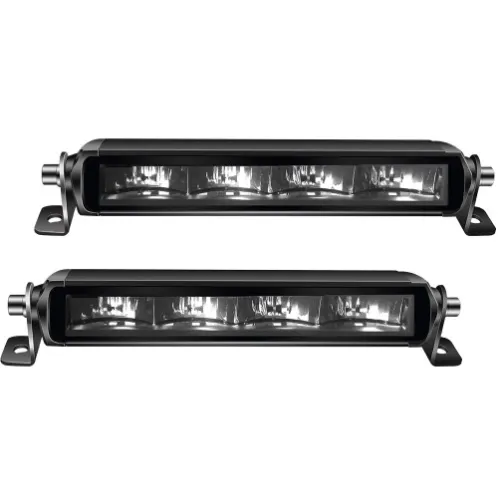
A work light is not simply a smaller headlight.
Its job depends on the machine.
A tractor working at night may need broad illumination around the equipment.
An excavator may need light directed toward the working area.
A truck may need auxiliary illumination for loading, reversing or work-site operations.
This is why professional buyers should choose work lights by application rather than wattage alone.
Start With the Job the Light Needs to Do
Before discussing product specifications, ask:
What does the operator need to see?
Possible requirements include:
- long-distance forward illumination
- wide-area working illumination
- side illumination
- rear work area
- loading zone
- equipment attachment area
The answer determines the beam requirement.
Flood Beam for Wide Working Areas
Flood-style optics are intended to distribute light across a broader area.
This can be useful where the operator needs to see:
- nearby ground
- machinery
- work area
- side environment
Potential applications can include agricultural and construction equipment.
Actual beam performance should be checked using the exact product.
Spot Beam for Longer-Distance Illumination
Spot-style optics concentrate illumination into a narrower forward area.
Depending on the application, this may be useful when operators need more distance.
However, a narrow beam may be less useful for close working environments.
This is why beam selection should follow the actual task.
Combo Beam as a Compromise
Some work lights or light bars use a combination of spot and flood optical elements.
This can provide a mix of:
- forward reach
- wider peripheral illumination
But combo does not automatically mean best.
Some applications need a dedicated flood.
Others need focused forward light.
Match the product to the job.
Voltage Must Be Confirmed
Equipment may use:
- nominal 12V systems
- nominal 24V systems
- other electrical configurations
Check the verified input range of the exact work light.
Never assume every work light supports both 12V and 24V.
For truck and heavy-equipment buyers, this question should be asked early.
Mounting Position Changes the Product Choice
Where will the light be installed?
Possible positions include:
- cab roof
- bumper
- rear frame
- side of equipment
- boom or attachment area
The mounting location affects:
- lamp size
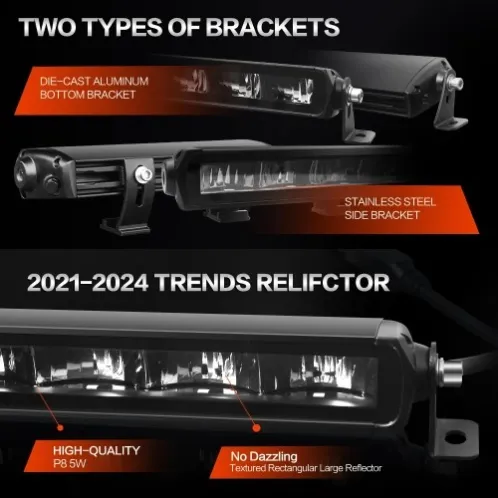
- bracket type
- adjustment
- cable routing
- beam direction
A product that works on a truck bumper may not be ideal for an excavator boom.
Vibration Matters
Tractors, excavators and heavy equipment can operate in demanding mechanical environments.
Buyers should inspect:
- bracket design
- mounting hardware
- housing assembly
- cable entry
If a supplier makes specific vibration-resistance claims, request supporting information for the exact product.
Do not rely on generic "heavy duty" language.
Dust, Mud and Water Matter
Work lights often operate outside clean road environments.
Potential exposure includes:
- dust
- mud
- rain
- pressure washing
- road spray
Check the verified ingress-protection information of the product.
Also inspect the complete installation:
- housing
- cable
- connector
because sealing performance involves the whole system.
Heat Management Still Matters
An external work light can operate for long periods.
Review:
- housing design
- thermal structure
- operating environment
Do not choose only by LED count or wattage.
The complete lamp should be evaluated.
Size Should Match the Machine
A small compact lamp can be useful on:
- tight mounting points
- equipment arms
- smaller agricultural machines.
Larger work lights may fit:
- trucks
- larger machinery
- fixed work areas.
More physical size is not automatically better.
Space, beam and application matter.
Consider Radio Interference
Agricultural and commercial equipment may contain:
- radios
- communication equipment
- GPS
- telematics
For these customers, electrical interference can become important.
Sample testing under realistic operating conditions can help identify potential issues.
Wiring Should Be Planned Properly
Multiple work lights can create significant electrical demand.
The installation should consider:
- total current draw
- wiring capacity
- switching
- fuse protection
- relay requirements where appropriate
The correct values depend on the exact lights and vehicle electrical system.
A qualified installer should size the circuit appropriately.
Do Not Install More Lights Than Necessary
More lamps do not always create better visibility.
Poorly positioned lights can create:
- glare
- reflections
- wasted electrical load
Start by defining the dark areas the operator needs illuminated.
Then place lights strategically.
Fleet Buyers Should Standardize Where Possible
If a customer operates many similar machines, standardizing several work-light models can simplify:
- spare inventory
- installation
- maintenance
- replacement
This can be more efficient than using many different lamp types.
Ask Operators for Feedback
Purchasing managers look at:
- price
- specification
- supply.
Operators experience:
- beam
- glare
- visibility
- mounting.
Both perspectives matter.
Sample a product and ask the people who actually use the equipment at night.
Build a Work-Light Range by Application
A distributor can organize the range into:
Compact Work Lights
For tight installation areas.
Flood Work Lights
For broad working zones.
Forward / Spot Products
For greater distance.
Light Bars
For larger or wider lighting requirements.
This is easier to sell than a catalog containing twenty unexplained lamps.
Source LED Work Lights with Sunrise Auto Parts
Sunrise Auto Parts supplies LED work lights, light bars and auxiliary lighting products for automotive and equipment aftermarket buyers.
Tell us your vehicle or equipment type, voltage system, mounting position and lighting requirement so we can discuss suitable products for sample evaluation.
Related Resources
Ready to match a work light to your machine? Discuss Your Work Light Application