
Sep 10, 2026
CSP vs COB LED Headlight Chips: What Wholesale Buyers Should Know
Compare CSP and COB LED headlight chip structures and learn why wholesale buyers should evaluate the complete bulb design instead of choosing by chip name alone.
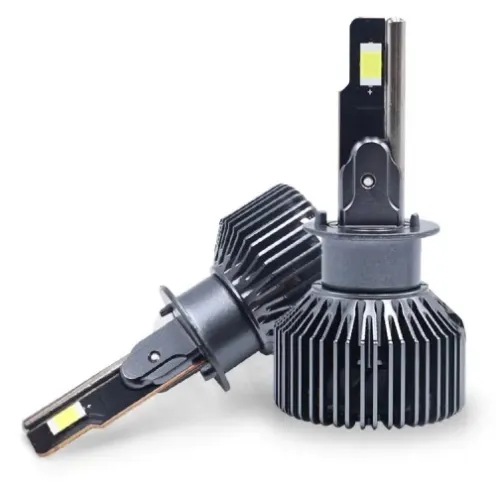
When buyers compare LED headlight bulbs, one of the first questions often sounds like this:
Which chip do you use?
CSP?
COB?
What chip model?
This is useful information.
But chip terminology is also one of the most oversimplified parts of the LED headlight market.
A strong LED headlight is not created by chip name alone.
The complete product design still determines how well the light source works inside a headlamp.
What Is CSP?
CSP stands for Chip Scale Package.
In simple terms, CSP technology allows the LED package to remain relatively close in size to the semiconductor chip itself.
For automotive LED headlight design, a compact light-emitting structure can be useful because optical positioning matters.
The headlamp reflector or projector was designed around a specific light-source location.
Keeping the emitting area controlled can help engineers position the light source more precisely.
What Is COB?
COB stands for Chip on Board.
In COB construction, multiple LED dies can be mounted directly onto a substrate and function as a larger light-emitting area.
COB technology is widely used across many LED lighting applications.
However, in a headlight retrofit product, buyers should pay close attention to the:
- emitting area
- optical position
- thickness of the light source
- relationship with the original headlamp optics
The technology name itself does not guarantee the final beam pattern.
Why CSP Is Common in Modern LED Headlight Bulbs
Many current aftermarket LED headlight designs use CSP-style packages because they can support relatively compact light-source layouts.
This can help engineers create designs intended to approximate the position of the original filament.
But buyers should still evaluate:
- chip layout
- board thickness
- bulb orientation
- optical position
- cooling
A CSP label alone does not prove excellent beam performance.
Why COB Products Still Exist
COB designs may offer advantages in other lighting applications and can also be used in some automotive LED products.
The important question is not:
Is COB old?
It is:
Does this exact light-source design work correctly for the intended optical system?
Technology should be evaluated in context.
Chip Size Affects Optical Behavior
In retrofit headlights, the size of the emitting area matters.
If the light source is too large or positioned incorrectly, the headlamp may produce:
- scattered light
- poor cut-off
- dark zones
- uncontrolled glare
That means a visually powerful LED board can still create disappointing road illumination.
Chip Name Does Not Equal Product Performance
Two bulbs can use the same chip family and still perform very differently.
Why?
Because the rest of the product may be different.
For example:
- PCB structure
- thermal design
- driver
- current setting
- fan
- heat pipes
- chip placement
- housing geometry
The LED chip is one component in a system.
Be Careful With Chip Marketing
The aftermarket often uses chip names as marketing shortcuts.
New model numbers can make a product sound automatically superior.
But buyers should ask:
- Is the chip specification confirmed?
- Is the same chip used in mass production?
- Does the sample match the quotation?
- Is the product designed well around the chip?
A newer chip name does not automatically mean a better wholesale product.
Beam Pattern Should Be Part of the Comparison
For headlight applications, compare:
- cut-off
- hotspot
- beam width
- glare
- high/low function where applicable
This is more useful than asking only:
Which chip is brighter?
A strong chip inside a poorly designed bulb can still produce a poor headlight result.
Thermal Management Still Matters
LED chips generate heat.
The thermal path may include:
LED chip
→ PCB
→ housing
→ heat sink
→ fan or passive cooling system.
If the thermal system is weak, the product may struggle regardless of the chip brand or model.
What Should Wholesale Buyers Ask?
When comparing products, ask for:
- LED chip type
- Light-source structure
- Product power specification
- Cooling design
- Driver configuration
- Beam samples or testing opportunities
- Production consistency
These questions create a more complete product comparison.
Do Not Build a Product Range Around Chip Names Alone
A distributor may be tempted to sell:
CSP Series
New CSP Series
Latest CSP Series
Newest CSP Series.
That quickly becomes confusing.
Instead, build products around customer needs:
- compact installation
- mainstream replacement
- higher-performance
- CANBUS-oriented
- premium positioning
Technology should support the product role.
It should not replace it.
Compare LED Headlight Technologies with Sunrise Auto Parts
Sunrise Auto Parts supplies multiple LED headlight bulb series using different LED and product structures for automotive aftermarket buyers.
Tell us your target market, required sockets and product positioning so we can discuss suitable models for sample evaluation.