
Aug 29, 2026
LED Headlight Cooling Systems: Fans, Aluminum and Copper Heat Pipes Explained
Learn how fans, aluminum heat sinks and copper heat-pipe designs are used in LED headlight bulbs and what wholesale buyers should evaluate.
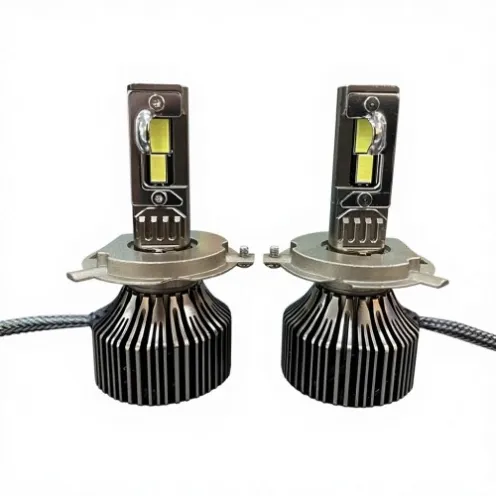
LED headlight buyers spend a lot of time comparing wattage and lumen numbers.
But those numbers are only part of the product.
LED chips generate heat during operation, and the way that heat is moved away from the light source is an important part of the product design.
This is why automotive LED headlight bulbs use combinations of aluminum structures, fans and, in selected designs, copper heat pipes.
Why Thermal Management Matters
Electronic components perform differently when operating temperatures become excessive.
A headlight bulb therefore needs a thermal-management system designed around the heat produced by the product.
This does not mean one cooling method is universally superior.
The important question is whether the complete cooling design is appropriate for the product.
Aluminum as the Main Heat-Dissipation Structure
Aluminum is widely used in LED headlight construction because it can form both the product body and a heat-dissipation structure.
Depending on the product, manufacturers may use:
- finned aluminum housings
- machined aluminum components
- fan-integrated aluminum structures
- passive aluminum cooling
When evaluating a sample, buyers should inspect the complete construction rather than simply asking whether aluminum is used.
Active Fan Cooling
Many LED headlight bulbs include a small cooling fan.
The fan moves air through or around the heat-dissipation structure.
Wholesale buyers should evaluate:
- fan operation
- noise
- product dimensions
- clearance after installation
- construction quality
A fan should be considered part of the overall system, not a standalone selling point.
Fanless Cooling
Fanless bulbs use passive thermal-management structures instead of an active fan.
Some customers prefer this architecture because it removes the moving fan component.
However, fanless does not automatically mean better.
The complete thermal design, product power level, dimensions and installation conditions still matter.
A distributor should compare actual products, not stereotypes.
Copper Heat Pipes in Higher-Performance Designs
Selected higher-performance LED headlight bulb designs use copper heat pipes to help transfer heat away from the LED area toward the cooling structure.
Copper is useful in thermal systems because of its heat-conducting properties.
In practical product design, the heat pipe works together with other components such as:
- LED board
- aluminum housing
- heat sink
- cooling fan
It should not be viewed as a magic component that determines the entire product performance by itself.
More Copper Pipes Does Not Automatically Mean Better
This is an important sourcing point.
Buyers sometimes compare products by counting:
one copper pipe
two copper pipes
three copper pipes
and then assume the larger number must always be better.
That is too simplistic.
Thermal performance depends on the complete design.
Consider:
- pipe dimensions
- contact with the heat source
- heat-transfer path
- aluminum structure
- airflow
- product power
- assembly quality
Engineering is a system.
One component should not be used as the only quality measurement.
Look at the LED Board Too
Heat starts near the LED light source.
The structure of the light-source board therefore matters.
When reviewing product samples or exploded-view diagrams, look at how the LED board connects to the thermal system.
A strong product design should create a clear heat path from the LED area toward the cooling components.
Installation Conditions Affect Cooling
A product does not operate in an open laboratory environment.
It operates inside a vehicle headlamp.
Different housings provide different amounts of:
- space
- airflow
- rear clearance
This means real installation tests remain valuable even when the cooling design looks impressive on paper.
What Should Wholesale Buyers Ask?
When comparing LED headlight cooling designs, ask:
- Is the product fan-cooled or fanless?
- What is the main housing material?
- Does the design use heat pipes?
- How large is the rear cooling structure?
- Will it fit the target headlamp housing?
- Is the same cooling configuration maintained for repeat orders?
- Can samples be tested before bulk purchasing?
These questions produce a better technical conversation than asking only for wattage.
Build a Product Range with Different Cooling Designs
A distributor may carry:
- compact fan-cooled models
- fanless products
- CANBUS series
- higher-performance heat-pipe designs
Different product structures can serve different customers and price positions.
The goal is not to declare one architecture the winner.
The goal is to understand why each product exists.
Explore LED Headlight Bulb Designs from Sunrise Auto Parts
Sunrise Auto Parts supplies multiple LED headlight bulb series using different cooling and driver configurations for automotive aftermarket distributors.
Tell us your target socket types, market and product positioning, and we can discuss suitable options for sample comparison.
Related Resources
LED Headlight Bulbs: https://www.chuxuparts.com/productsFan vs Fanless LED Headlight Bulbs: https://www.chuxuparts.com/posts/fan-vs-fanless-led-headlight-bulbs-wholesale-guideInner Driver vs Separate Driver LED Headlight Bulbs: https://www.chuxuparts.com/posts/inner-driver-vs-separate-driver-led-headlight-bulbsHT7 PRO LED Headlight Bulbs: https://www.chuxuparts.com/products/ht7-pro-super-bright-canbus-headlamp-with-fan-h1-h4-h7-h11-9005-9006-led-headlight-bulbs