
Aug 29, 2026
LHD vs RHD Bi-LED Projector Lenses: What Importers Need to Confirm
Understand why LHD and RHD requirements matter when sourcing Bi-LED projector lenses and what distributors should confirm before placing a wholesale order.
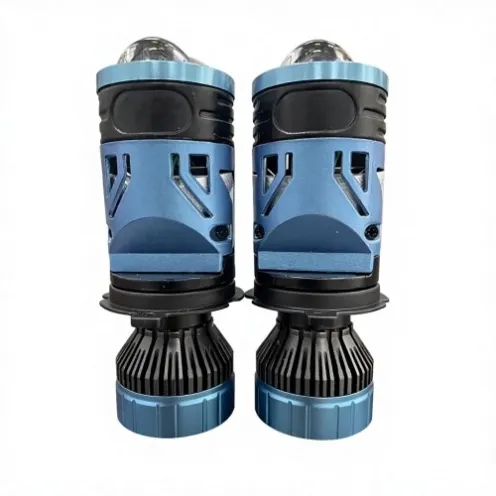
When distributors buy Bi-LED projector lenses, size and brightness usually receive most of the attention.
But there is another detail that can become much more important once the product is installed:
Is the projector intended for the correct driving-side market?
For importers, distributors and retrofit shops, left-hand-drive and right-hand-drive requirements should be confirmed before a bulk order is placed.
What Do LHD and RHD Mean?
LHD refers to left-hand-drive vehicle markets, while RHD refers to right-hand-drive vehicle markets.
The vehicle layout and road-driving system affect how the headlamp beam should be controlled.
A projector lens is not simply a round optical component producing light straight ahead.
The beam pattern is designed to illuminate useful areas of the road while controlling glare.
This is why the intended market needs to be considered during projector sourcing.
Why Beam Pattern Matters
A good low beam should provide useful road illumination without unnecessarily disturbing oncoming traffic.
The projector optics, shield and internal structure help shape that beam.
For professional buyers, this means a product should not be evaluated only by:
- wattage
- lumen claims
- lens diameter
- housing appearance
Actual optical behavior matters.
Before selecting a model for large-scale distribution, buyers should examine the beam pattern produced by the exact sample they intend to sell.
Confirm the Target Market Before Ordering
A supplier should know where the projector lenses will be sold.
When requesting a quotation, tell the supplier your target country or region.
This becomes especially important for distributors serving several markets.
Do not assume that one projector configuration should automatically be shipped to every destination.
The safest purchasing process is to state the market clearly before sample approval.
Ask for Beam Photos or Testing Samples
Catalog images are useful for understanding the product design, but they do not tell the full optical story.
Professional buyers should request representative samples and check:
- low-beam pattern
- cut-off shape
- high-beam operation where applicable
- beam width
- road illumination
- consistency between units
If your customers are professional retrofit shops, their installation feedback can also be extremely valuable.
LHD and RHD Are Not Marketing Labels
Do not treat LHD and RHD as two keywords that simply need to appear on a product page.
They are application requirements.
The product supplied should match the market in which it will actually be installed.
That means distributors should record the required version clearly in:
- quotation
- purchase order
- product confirmation
- packaging or model identification where appropriate
This reduces the risk of receiving the wrong configuration.
Retrofit Shops Should Be Involved in Sample Approval
A wholesaler may look mainly at product appearance, price and packaging.
A retrofit technician will notice different details.
They may evaluate:
- installation structure
- alignment
- mounting
- beam cut-off
- high/low switching
- adjustment range
For projector products, involving experienced installers before a large first order can reduce future complaints.
Do Not Compare Projectors Only by Size
A 1.5-inch product and a 3.0-inch projector may serve different applications.
Even two projectors with the same nominal lens size can have different internal optical designs.
Therefore, size should be treated as one purchasing parameter rather than the full product definition.
A professional sourcing decision should combine:
- intended application
- installation method
- target market
- optical performance
- product positioning
What Information Should You Send Your Supplier?
For a more accurate recommendation, provide:
- Target country or market
- Customer type
- Required projector format or size
- Intended application
- Estimated quantity
- Sample requirements
This gives the supplier much more useful information than asking only:
How much is your projector lens?
Source Bi-LED Projector Lenses with Sunrise Auto Parts
Sunrise Auto Parts supplies automotive projector lens products for distributors, wholesalers and aftermarket retrofit buyers.
Tell us your target market and projector requirements, and we can discuss suitable products for sample evaluation before bulk purchasing.
Related Resources
LED Projector Lens: https://www.chuxuparts.com/productsBi-LED Projector Lens Buying Guide: https://www.chuxuparts.com/posts/bi-led-projector-lens-buying-guide-retrofit-shopsHow to Choose a Bi-LED Projector Lens Supplier: https://www.chuxuparts.com/posts/how-to-choose-bi-led-projector-lens-supplier