
Aug 20, 2026
Bi-LED Projector Lens Buying Guide for Retrofit Shops and Distributors
A practical Bi-LED projector lens buying guide for retrofit shops and distributors covering beam performance, dimensions, installation, samples and sourcing.
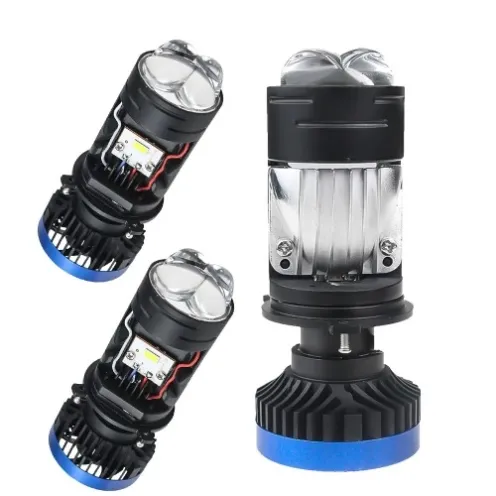
Buying a Bi-LED projector lens is very different from buying a conventional LED replacement bulb.
For retrofit shops and automotive lighting distributors, the product is not simply another light source.
Optical performance, physical dimensions, mounting design and installation requirements all affect whether the product is suitable for your customers.
That means buyers should evaluate projector lenses as complete lighting systems rather than comparing only headline specifications.
Start With the Customer You Serve
Before comparing projector models, define your target customer.
Different buyers may include:
professional headlight retrofit shops
automotive lighting wholesalers
car accessory stores
modification businesses
private-label lighting brands
A professional retrofit shop may care deeply about optical behavior and installation structure.
A general distributor may place more emphasis on range planning, packaging and repeat-order consistency.
Knowing who will buy the product makes model selection much easier.
Beam Performance Should Be Evaluated in Real Use
Projector lenses are designed to control and distribute light.
This makes actual beam behavior one of the most important evaluation points.
When testing samples, buyers should look at factors such as:
low-beam distribution
cut-off characteristics
high-beam operation where applicable
beam width
usable road illumination
consistency between samples
A specification sheet cannot fully replace real beam testing.
If projector lenses are an important part of your business, creating a repeatable testing process can help you compare new products more objectively.Check Physical Dimensions Before Ordering
Projector lens dimensions affect installation.
Before placing a wholesale order, confirm the physical size and mounting requirements of the exact model.
Useful information may include:
lens size
overall dimensions
mounting points
wiring layout
driver position
included accessories
installation space requirements
Do not assume that two projector lenses with similar front appearances will install in exactly the same way.
High Beam and Low Beam Functions Need Clear Confirmation
Bi-LED products normally involve both low-beam and high-beam operation.
Wholesale buyers should confirm how the switching system works on the exact product being considered.
During sample testing, check that:
low beam operates correctly
high beam switching is reliable
wiring is clearly identified
the product returns to normal low-beam operation consistently
For retrofit businesses, these details affect installation efficiency and after-sales service.
Consider LHD and RHD Market Requirements
Driving-side requirements can matter in projector lens sourcing.
If your market uses left-hand-drive or right-hand-drive vehicles, discuss the intended version with the supplier before ordering.
Do not treat this as a packaging detail.
The product should be suitable for the road and market in which it will be installed.
When ordering samples, make sure you are testing the correct version for your target market.
Ask Exactly What the Product Name Means
Terms such as:
Bi-LED
laser
laser spotlight
projector lens
fog projector
retrofit projector
can be used differently across suppliers and online platforms.Professional buyers should ask what the actual optical and light-source configuration is instead of relying only on a marketing title.
Clear product naming reduces misunderstanding when you later sell the product to your own customers.
Do Not Build Inventory Before Testing Samples
Projector lens sourcing benefits from a sample-first approach.
A sensible workflow is:
Define your target application.
Select several candidate products.
Test physical installation.
Evaluate low and high beam.
Review beam pattern.
Check wiring and accessories.
Gather feedback from installers.
Choose the models that deserve inventory.
This is much safer than buying a large range based entirely on catalog images.
Product Range Structure Matters
A distributor does not necessarily need twenty similar projector lenses.
A clearer assortment might include:
compact projector-style products
mainstream retrofit projector lenses
higher-positioned projector products
fog or auxiliary projector solutions
Each product should have a reason for being in the range.
That makes it easier for your sales team and customers to understand the differences.
Repeat-Order Consistency Is Important
If a projector model sells successfully, you will need to reorder it.
Before establishing it as a core SKU, ask how product changes are managed.
Important questions include:
Will the mounting structure remain the same?
Will wiring remain consistent?
Will major component changes be communicated?
Can packaging remain consistent?
Can the same product code be maintained?
A good wholesale product should be manageable over multiple orders, not only attractive in the first sample.Source Bi-LED Projector Lenses with CHUXU PARTS
CHUXU PARTS supplies automotive projector lens products for wholesalers, distributors and retrofit businesses.
Tell us your target market, preferred lens format and customer type, and we can discuss suitable options for sample evaluation.
Explore LED Projector Lens products: https://www.chuxuparts.com/products?category=led-projector-lens
Read How to Choose a Bi-LED Projector Lens Supplier: https://www.chuxuparts.com/posts/how-to-choose-bi-led-projector-lens-supplier
Compare 1.5 Inch H4 Bi-LED Lens vs 3.0 Inch Projector Lens: https://www.chuxuparts.com/posts/1-5-inch-h4-bi-led-vs-3-inch-projector-lensRequest Bi-LED Projector Lens Samples: https://www.chuxuparts.com/contact