
Buying & Sourcing Guide
LED Light Bar Spot vs Flood vs Combo: Which Beam Pattern Should You Stock for Pickup and Off-Road Customers?
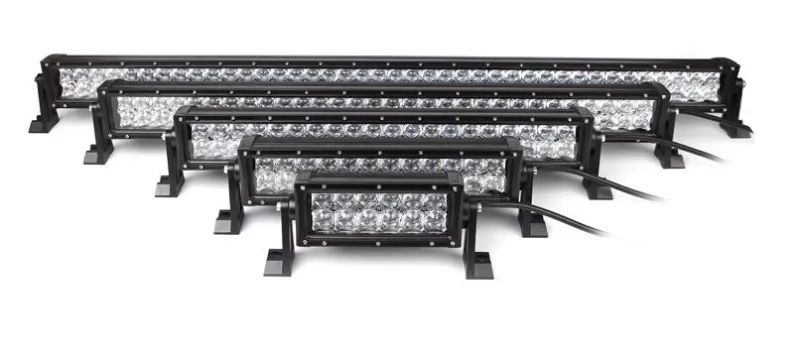
If you sell pickup and off-road accessories, you already know the pattern. Take a typical scenario: a customer buys a light bar, fits it on a Saturday, drives one night on the trail — and comes back on Monday. Not because the bar is broken, but because the beam is wrong: a spot beam that leaves the sides of the trail black, or a flood beam that dies out fifty metres ahead on an open track. Then comes the refund, the return shipping, and the review that says your lights are "not bright enough."
For a distributor or wholesaler choosing light bars to stock, this is the decision that decides your return rate. Not the wattage on the box. Not the price. The beam pattern — spot, flood, or combo — matched to the ground your customers actually drive on. Get that right, and one bar does the job. Get it wrong, and even a good bar comes back.
This guide is written for that stocking decision. It explains the three beam patterns in plain terms, the size and mounting questions that cause most fitment returns, the "what's in the box" check that prevents the most common complaint in light-bar reviews, and how to build a small range that covers pickup, off-road and work-truck buyers without tying up cash in slow SKUs.
Spot, Flood and Combo: What Each One Actually Does
A light bar is not one product. It is three different tools that happen to look alike.
Spot beam throws a narrow, concentrated beam a long way ahead. Published buying guides typically describe it as a 10–15 degree beam, useful at speed on open ground — desert tracks, fire roads, long straight farm roads — where the driver needs to see an obstacle early. Its weakness is width: close to the vehicle and off to the sides, it lights almost nothing. A customer who buys a spot bar for slow, wooded trails will tell you it is useless, and they will be right — for their terrain.
Flood beam does the opposite. It spreads light wide — guides commonly quote 60 degrees or more — over a short to medium distance. It is the right tool for slow technical driving, rock crawling, loading a trailer at night, setting up camp, or lighting a worksite. Its weakness is reach: on an open road at speed, the light runs out before the driver does.
Combo beam mixes the two in a single bar: spot diodes in the centre, flood diodes at the edges. It gives forward distance and side width from one unit. Every buying guide published in the last year reaches the same conclusion: if your customer only buys one bar, a combo is the safest recommendation for mixed driving. That is why it is also the safest core SKU for a distributor to stock.
Beam pattern | Beam shape | Best for | Who buys it | Stocking note |
|---|---|---|---|---|
Spot | Narrow, long throw | Open ground, high-speed tracks, desert | Overlanders, desert runners, rural drivers | Stock for open-terrain markets; warn buyers it is not a work light |
Flood | Wide, short to medium range | Technical trails, campsites, worksites, loading | Work trucks, farms, UTV and ATV riders | Pairs well with a spot bar; rarely the only bar a pickup owner buys |
Combo | Spot centre + flood edges | Mixed driving, the one-bar-does-most job | Pickup owners, general off-roaders, first-time buyers | Your core SKU — the default recommendation when the customer is unsure |
The table is the whole stocking logic in one place. A customer who can describe their terrain can be matched in one question: "Do you drive fast on open ground, slow on tight trails, or a bit of both?" Fast and open is spot. Slow and tight is flood. Both — or "I'm not sure" — is combo.
Size and Mounting: Measure Before You Order
The second most common return is size. A 52-inch bar does not fit a mid-size pickup roof, and a 10-inch pod does not satisfy a customer who wanted a full roof bar. Buying guides converge on a simple size-to-application map, and it is worth printing out for your counter staff:
- 10–12 inch: bumper auxiliary, A-pillar pods, UTV and ATV mounts. Compact, easy to fit, the natural add-on sale.
- 20–22 inch: mid-size truck roof or bumper. The most common single-bar size for pickup owners.
- 30–32 inch: full-size truck roof bar.
- 40–52 inch: full-size roofline, maximum coverage, usually dual-row.
Two more choices sit inside the size decision. Straight vs curved: a curved bar follows the roofline and wraps the beam slightly wider at the edges; a straight bar is simpler to mount and usually cheaper. Single-row vs dual-row: a dual-row bar packs more diodes into the same length and gives a wider, denser beam, but it also runs hotter and needs better heatsinking — worth asking your supplier about, not assuming. Neither choice is right or wrong in itself; each one fits a different mounting position and a different budget.
Typical scenario: a distributor in a pickup-heavy market stocks a 20-inch combo as the volume line, a 40-inch combo for full-size roofs, and a 10-inch flood pod as the add-on. Three SKUs cover most walk-in customers, and the staff only has to learn one matching question.
What's in the Box: The Complaint You Can Prevent Before It Happens
Read the reviews of any budget light-bar brand and the same complaints repeat. A recent review roundup by The Reviews Journal (updated late October 2026) looked at Nilight — one of the biggest-selling budget brands — and found a Trustpilot score of 3.6 from 42 reviews, with 36% one-star. The recurring problems were not light output. They were missing parts and split shipments, bars shipping without a wiring harness, and warranty disputes about what counts as a defect. One buyer after another reported the same discovery: the bar arrived, but the harness had to be bought separately.
That is a purchasing failure, not a product failure — and it is entirely preventable at the ordering stage. Before you place a light-bar order with any supplier, get these five answers in writing:
- Is a wiring harness included? With relay, fuse, and switch — or is the bar sold bare?
- Are mounting brackets included, and do they fit the mounting positions your customers use?
- What connectors are on the leads, and are they sealed against water and dust?
- What is the rated voltage — 12V only, or 12V/24V for diesel and truck applications?
- What does the warranty actually cover, and who pays return shipping on a warranty claim?
If a supplier cannot answer these in writing, that is your answer about the supplier. A bar that ships complete costs a little more per unit and saves a multiple of that in returns, angry reviews, and counter time.
Water, Dust and the Condensation Question
Light bars live outside the vehicle, so sealing is not a detail — it is the product. Buying guides generally treat IP67 as the minimum to ask for: dust-tight, and able to survive brief submersion. But a rating on a listing is only as good as the test behind it, so ask your supplier for the rating and the test report, not just the letters on the box.
One distinction saves a lot of arguments with end customers. Light condensation inside the lens that clears after the bar has been on for half an hour is a known, common occurrence — warm air inside the housing meets a cold lens, moisture forms, and the heat of the LEDs drives it off again. Standing water, droplets that do not clear, or fog that returns every time it rains is different: that points to a failed seal, usually at the lens gasket, the wire entry, or an end cap, and it will corrode the board over time.
The connections your customer makes are the weak point even on a well-sealed bar. General workshop practice, repeated across off-road guides, is to use sealed connectors for inline joints, protect terminals with dielectric grease, and wire a high-power bar through a relay with a fuse close to the battery — never straight to the battery without one. A bar that fails in the field usually fails at a corroded connector first, not in the diodes. Passing that one paragraph of advice to your customers is worth more than any spec sheet. The same failure logic applies to headlight bulbs — see why cheap LED headlight bulbs die early.
Dual-Colour Bars and Work Lights: The Add-Ons That Lift the Order
Two more products belong in the same conversation, because they answer the two complaints a single white bar cannot fix.
The first is the dual-colour bar. A white beam is the default, but in rain, dust and fog a warmer amber beam cuts through better and glares back less. A dual-colour bar — white and amber in one unit — lets the driver switch to the colour the conditions need. Dual-colour is available as a custom option on SUNRISE light bars, so if your market needs amber for rain and dust, ask for it on your quotation rather than assuming a stock bar has it — the stock T40, for example, is a single-colour 6000K bar. It is the natural upsell for customers who drive in wet or dusty conditions.
The second is the work light pod. A compact 40W 3-inch pod is not a driving light; it is a task light — bumper, A-pillar, rear, or roof-rack mounted — for loading, reversing into a dark yard, or lighting a worksite. It is the smallest ticket in the range and the easiest add-on to any light-bar sale, and it uses the same harness, relay and bracket conversation as the main bar.
Both add-ons share the same stocking logic: they solve a specific job, and they are sold by asking the customer what job the bar has to do.
How to Build a Range That Sells
If you are starting a light-bar range, or rebuilding one that generates too many returns, stock to the customer, not to the catalogue. A workable starting range looks like this:
- Core volume line: a 20–22 inch combo beam bar. The default answer for pickup owners and first-time buyers. This is the SKU that should never be out of stock in season.
- Full-size line: a 40–52 inch combo for full-size trucks and overland builds. Fewer units, higher ticket, ordered to the same beam logic.
- Work and add-on line: a compact flood pod — for example a 3-inch work light — for bumpers, A-pillars and worksites, plus a dual-colour bar for rain and dust markets.
- One spot bar: for the open-ground and desert customers who ask for distance by name. Stocked in depth only where that terrain is common.
Four lines, one matching question, and a written checklist for harness, brackets, voltage and warranty on every order. That is the whole system. It keeps slow stock down, keeps the counter conversation short, and — most importantly — it keeps the bar on the customer's truck instead of coming back to your warehouse.
The SUNRISE Light Bar Range
SUNRISE builds its light bars on the same terms as the rest of the LED range. The current range includes the BC-4D series — including the BC120-4D size at 21.5 inches and 120W — a curved light bar (22/30 inch, 6500K, 120W, with position light), the T40 40W 9-inch light bar (6000K, DC 10–100V), and a 40W 3-inch work light (6500LM, 6000K, 12V/24V) — bars and pods that cover the core, full-size and work-light slots in the range above, with dual-colour available as a custom option. Beam pattern and full specifications are confirmed per model on the quotation — send the sizes and beam patterns your market needs and we will match them, rather than asking you to guess from a listing.
The commercial terms are the same across the range: 18-month warranty; in-stock items from 50 sets in neutral colour boxes; your logo printed free from 100 sets; custom colour boxes from 1,000 sets (+$0.50/set); T/T 30% deposit and 70% before shipment; in-stock orders ship within one week, and orders without stock ship 20–30 days after the deposit. Private-label and custom-box orders are agreed in writing before production. If you want the per-model spec sheets — beam pattern, dimensions, voltage, and what is included in the box — ask for them with your first inquiry and we will send them before you commit to a quantity.
FAQ
What is the minimum order for light bars?
In-stock models start at 50 sets in neutral colour boxes. Logo printing is free from 100 sets, and custom colour boxes start at 1,000 sets (+$0.50/set). If you want to trial a single beam pattern first, start with the 50-set in-stock tier and scale the patterns that move.
Can I get samples before a bulk order?
Yes — samples are provided quickly. Tell us the sizes and beam patterns you want to test and the vehicles your customers drive, and we will quote the sample order with the lead time.
Are the wiring harness and brackets included?
That depends on the model, and it is exactly the question to ask before ordering. Tell us what your customers expect in the box and we will confirm in writing what is included — harness, relay, brackets, and switch — so there are no surprises at installation.
What voltage do the bars work on?
Confirm the voltage per model on the quotation. Many buyers run 12V pickups, but diesel and truck customers need 24V compatibility — state your market's voltage when you ask for a quote so the matched model is right first time.
What is the lead time?
In-stock items ship within one week. Items without stock ship 20–30 days after the deposit is received. Custom colour boxes and private-label orders are agreed in writing before production, with the timeline fixed at that point.
What warranty do light bars carry?
18 months, the same as the rest of the SUNRISE LED range. Warranty terms and the return process are confirmed in writing with your order.
Your Next Step
If you stock light bars, the fastest way to cut returns is to stop guessing the beam pattern. Send us the sizes your customers ask for, the terrain they drive, and the vehicles they fit — or simply your model list — and we will come back with a matched quotation, the per-model spec sheets, and samples. One email is enough to start.
WhatsApp: +86 173 6284 6689 · Email: sherry@chuxuparts.com — send your model list or target vehicles for a quotation and samples.