
Sep 10, 2026
LED Headlight Bulbs vs Bi-LED Projector Lenses: Which Product Should Distributors Sell?
Compare LED replacement bulbs and Bi-LED projector lenses from a distributor perspective, including installation, customer type, product positioning and inventory.
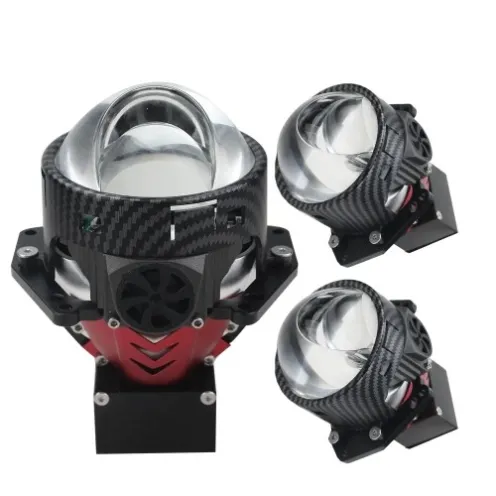
LED headlight bulbs and Bi-LED projector lenses are both part of the automotive lighting aftermarket.
But they solve different customer problems.
One is generally a replacement light-source product.
The other is a more complete optical retrofit product.
For distributors, understanding this difference is important because the:
customer
sales channel
installation
price position
and technical support
can be completely different.
Quick Comparison
Factor | LED Headlight Bulb | Bi-LED Projector Lens |
|---|---|---|
Main role | Light-source replacement/upgrade | Optical retrofit |
Installation complexity | Usually lower | Usually higher |
Typical customer | Wholesaler, retailer, repair shop | Retrofit specialist, modification shop |
Vehicle modification | Often limited | More significant |
Technical skill needed | Lower to moderate | Moderate to high |
Product education required | Socket and fitment | Optics, installation and beam |
These are general differences.
Exact products and installations vary.
What Is an LED Headlight Bulb?
An aftermarket LED headlight bulb replaces an original light source in a compatible headlamp application.
Common sockets can include:
- H4
- H7
- H11
- 9005
- 9006
The main appeal is usually:
- replacement
- upgrade
- relatively straightforward installation
depending on the vehicle.
What Is a Bi-LED Projector Lens?
A Bi-LED projector is a more complete optical system.
It typically integrates:
- LED light source
- projector optics
- low-beam function
- high-beam function
within the projector assembly.
Installing one generally requires more technical retrofit work than replacing a bulb.
The Customer Is Different
This is perhaps the biggest commercial difference.
LED Bulb Customers
Can include:
- auto parts distributors
- repair shops
- accessory retailers
- online sellers
- private-label brands
Bi-LED Projector Customers
Often include:
- headlight retrofit shops
- modification specialists
- automotive lighting specialists
A general parts store may sell many LED bulbs but very few projector lenses.
A specialist retrofit shop may have the opposite opportunity.
Installation Complexity Is Different
Replacing a bulb may involve:
remove original bulb
install LED bulb
connect driver
check beam.
A projector retrofit can involve:
- opening the headlamp
- mounting the projector
- wiring
- optical alignment
- resealing
- final adjustment
Professional installation capability therefore matters much more.
Projector Products Need More Technical Selling
A bulb salesperson may focus on:
- socket
- product series
- cooling
- installation
- lens size
- high/low beam
- optical pattern
- LHD/RHD
- mounting
- dimensions
The sales team needs different knowledge.
Beam Control Is Central to Projector Products
With LED replacement bulbs, the original reflector or projector remains part of the optical system.
With a Bi-LED projector retrofit, the projector itself becomes a major part of the new optical system.
That is why professional buyers pay attention to:
- cut-off
- beam distribution
- high-beam function
- projector alignment
A projector should not be selected only by wattage or lumen claims.
Inventory Economics Are Different
LED bulbs often contain many socket SKUs.
For example:
H4
H7
H11
9005
9006
Projector lenses may involve fewer socket-style SKUs but different:
- lens sizes
- mounting formats
- product tiers
The inventory structure is therefore different.
LED Bulbs May Have Broader Sales Channels
Because replacement bulbs are more familiar to general automotive retailers, distributors may be able to sell them through a wider channel.
This can make them suitable as a high-volume core category.
Bi-LED projectors may have:
lower unit volume
but
more specialized customers.
That does not mean one category is better.
They serve different markets.
Projectors Can Create Professional Customer Relationships
Retrofit shops are often technically engaged customers.
If they trust a projector product, they may repeatedly purchase the same model.
They may also provide valuable feedback about:
- installation
- beam
- customer demand
For suppliers and distributors, specialist relationships can become valuable over time.
Should a Distributor Sell Both?
Potentially, yes.
A product portfolio might use:
LED Headlight Bulbs
As the broad replacement category.
Bi-LED Projectors
As the specialist retrofit category.
This allows the distributor to serve both:
mainstream replacement demand
and
professional modification demand.
Do Not Sell Projectors to Customers Who Cannot Install Them
A product sale can become an after-sales problem if the buyer does not understand the installation requirements.
Before selling projector products, clarify:
- who will install them
- what type of headlamp is involved
- what size is required
- target market
- LHD/RHD requirement where applicable
Qualification protects both sides.
Samples Matter for Both Categories
For LED bulbs, test:
- fitment
- beam
- electrical behavior
- cooling
For projector lenses, test:
- installation
- cut-off
- high/low function
- optical performance
- consistency
The evaluation method should match the product.
Which Category Should You Start With?
If your customers are mainly:
general wholesalers
repair shops
retail stores,
LED bulbs may be the more natural core category.
If you already serve:
retrofit shops
modification specialists
headlight technicians,
Bi-LED projector lenses may be an attractive additional category.
Then choose the product.
Compare LED Headlight and Projector Products with Sunrise Auto Parts
Sunrise Auto Parts supplies LED headlight bulbs and projector lens products for different automotive aftermarket channels.
Tell us who your customers are and what lighting products you currently sell, and we can discuss suitable products for sample evaluation.