
Sep 10, 2026
Copper PCB vs Aluminum PCB in LED Headlights: What Is the Difference?
Learn how copper and aluminum PCB structures affect LED headlight thermal design and why buyers should evaluate the complete heat-transfer system.
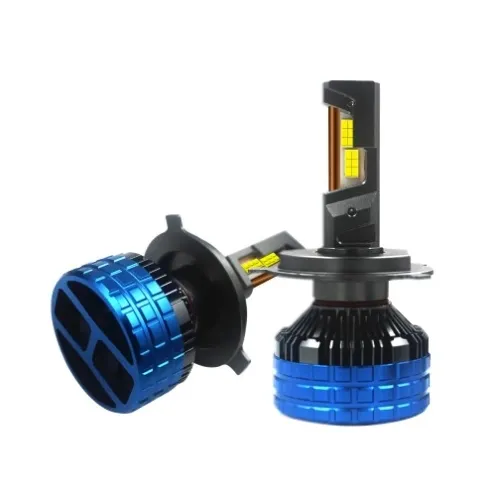
LED headlight suppliers frequently talk about thermal-management materials.
Copper PCB.
Aluminum PCB.
Copper heat pipe.
Aluminum housing.
These words can sound highly technical.
But buyers often receive very little explanation of what they actually mean.
The basic principle is simple:
Heat needs a path away from the LED chips.
PCB material is one part of that path.
Why the PCB Matters
LED chips are mounted onto a board.
That board does more than hold the LEDs electrically.
It also forms part of the thermal path.
Heat generated near the LED chips needs to move through the board and toward the larger cooling system.
Poor heat transfer near the light source can create a thermal bottleneck.
What Is an Aluminum-Based PCB?
Metal-core PCBs using aluminum are common across LED lighting.
A typical structure may contain:
- conductive circuit layer
- insulating layer
- aluminum base
The aluminum base helps spread heat into the surrounding thermal structure.
Aluminum also has practical advantages in manufacturing and cost.
It is therefore widely used across many LED products.
What Is a Copper-Based PCB?
Copper has higher thermal conductivity than aluminum as a material.
For this reason, selected higher-performance thermal designs may use copper components or copper-based PCB structures to improve heat transfer.
However, simply writing:
Copper PCB
does not tell the buyer everything about the design.
More Expensive Material Does Not Automatically Mean Better Product
This is a critical sourcing lesson.
A product using more copper may sound premium.
But thermal performance depends on many factors.
These include:
- PCB construction
- interface between components
- housing
- heat sink
- fan
- airflow
- power level
- assembly quality
A well-engineered aluminum-based product can outperform a poorly designed copper-based product.
Material alone is not the answer.
Copper Heat Pipes Are Different From Copper PCBs
These terms are often mixed together.
A copper PCB is part of the LED mounting and thermal structure.
A copper heat pipe is a separate thermal-transfer component designed to move heat from one location to another.
A product may use:
- copper PCB
- copper heat pipes
- both
- neither
Do not assume one term means the other.
Why Higher-Power Products Need More Thermal Attention
As electrical input and heat generation increase, thermal design becomes more demanding.
This is why higher-positioned LED headlight products may use combinations of:
- copper thermal components
- aluminum housings
- larger heat sinks
The exact design should match the actual operating requirements.
Look at the Entire Heat Path
When reviewing a product, imagine the path heat follows.
For example:
LED chip
→ PCB
→ thermal interface
→ housing
→ heat pipe or heat sink
→ airflow.
If one stage is weak, the entire thermal system may become less effective.
This is why exploded-view images can be useful.
Ask Whether the Material Claim Is Verified
Copper PCB,
ask whether that claim applies to the exact current model.
Product versions can change.
The quotation, catalog, sample and website should all describe the same product.
Specification consistency is part of supplier quality.
Cooling Fans and PCB Materials Work Together
An active fan does not replace good conduction.
And a good PCB does not eliminate the need for adequate heat dissipation elsewhere.
A strong thermal system combines:
heat transfer
and
heat removal.
Both matter.
Do Not Use PCB Material as the Only Product Tier
A distributor should not automatically create:
Aluminum = cheap
Copper = premium.
Customer value depends on the complete product.
A lower-power compact product may not require the same thermal architecture as a high-performance model.
Compare the design to the application.
Sample Testing Still Matters
During sample testing, evaluate:
- stable operation
- fan behavior
- abnormal heat
- construction
- consistency across units
If possible, compare several products under similar test conditions.
The goal is understanding the complete design, not only reading the PCB material on a specification sheet.
Technical Marketing Should Stay Accurate
Avoid exaggerated claims such as:
Copper PCB means no heat problem.
or:
Copper PCB gives double lifespan.
Unless specific testing supports those claims, they should not be used.
A more professional message is:
This product uses a copper-based thermal structure as part of its cooling design.
Accuracy builds trust.
Compare LED Headlight Cooling Designs with Sunrise Auto Parts
Sunrise Auto Parts supplies LED headlight bulb products using different thermal-management structures for automotive aftermarket buyers.
Tell us your required sockets, product level and market so we can discuss suitable products for sample evaluation.