
Product Knowledge
Bi-LED Projector Lens Retrofit: 1.5" Mini vs 3.0" — Which One Fits Your Market?
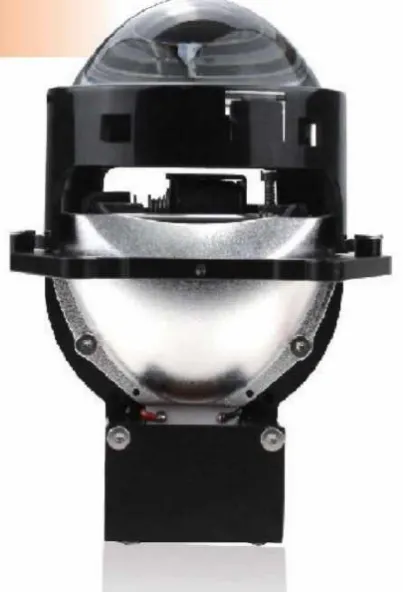
Bi-LED Projector Lens Retrofit: 1.5" Mini vs 3.0" — Which One Fits Your Market?
A customer walks into a retrofit shop with a simple request: "Make my headlights actually work at night." The shop owner has two very different answers on the shelf. One is a 1.5-inch mini Bi-LED lens that drops into the existing headlight with minimal surgery. The other is a full 3.0-inch Bi-LED projector that replaces the whole optical assembly and throws a beam nothing else in the shop can match. Both are called "Bi-LED projector lenses." They are not the same product, they are not bought by the same customer, and a distributor who stocks the wrong one for their market ends up with the same expensive problem either way: lenses sitting on the shelf while the other size sells out somewhere else.
This is the comparison that decides that stocking call. It covers what each size actually is, which vehicles and customers each one serves, where the installation risk sits, and how to split an order between them — so the next time a shop asks you for "a projector lens," you can ask the two questions that matter and send them the right box.
What is a Bi-LED projector lens, and why is demand moving this way?
A Bi-LED projector lens is a self-contained optical module: an LED light source, a reflector or lens system, and a shutter that switches the same unit between low beam and high beam — "bi" meaning both beams from one module. It replaces the factory halogen reflector bowl or the ageing HID projector inside the headlight housing, and it produces a sharp cutoff line: bright light below the line, darkness above it, so the road is lit and oncoming drivers are not blinded.
Three forces are pushing demand toward this category right now. First, the retrofit market is maturing past simple bulb swaps: owners who already tried an LED bulb in a reflector housing and got scatter and glare are coming back for the proper optical solution. Second, the vehicles that most need it — 2010s sedans, SUVs and pickups with tired halogen or fading HID projectors — are now squarely in the age window where owners spend on lighting. Third, the supply side has caught up: 3.0-inch Bi-LED lenses have become a staple of professional retrofit shops, with wholesale pricing that makes them a realistic upgrade rather than a luxury, while the newer 1.5-inch mini lenses have opened the category to vehicles and budgets the 3.0-inch never reached.
For a distributor, the practical meaning is that "projector lens" is no longer one product. It is a two-size range, and the sizes serve different buyers.
The 1.5-inch mini lens: the easy install, the wide market
The 1.5-inch mini Bi-LED lens is built around one idea: fit where a full-size projector cannot. Its small diameter lets it mount into housings that were never designed for a projector — compact cars, motorcycles, and the many Southeast Asian market vehicles where the headlight housing is shallow and the owner still wants a real cutoff line instead of a scattered bulb.
The installation story is the selling point. A mini lens typically mounts through the existing bulb opening with far less cutting, baking and resealing than a 3.0-inch retrofit. That matters commercially in three ways. First, the labour cost drops, so the total job price falls into the range an ordinary owner will pay rather than only an enthusiast. Second, the risk drops: less housing surgery means fewer cracked lenses, fewer reseal failures and fewer comebacks — and comebacks are what kill a retrofit shop's margin faster than any part price. Third, the addressable market widens dramatically: any workshop with basic skills can offer it, not only specialist retrofit shops.
The trade-off is honest and should be stated plainly to customers: a smaller optical system cannot match the outright beam width and distance of a full 3.0-inch projector. The mini lens wins on fitment, price and installability, not on maximum output. For a distributor serving Southeast Asia, Latin America or the motorcycle and compact-car trade, that trade is usually the right one — volume lives where installation is easy. The H4 mini projector lens is the clearest example: in the Philippines, H4 mini projector bulbs and lenses dominate the marketplace rankings outright, and the same H4 logic runs through Indonesia, Malaysia and the wider region.
The 3.0-inch Bi-LED lens: the professional retrofit standard
The 3.0-inch lens is the other end of the same market. It is a full-size projector module that replaces the entire internal reflector or projector assembly, and it is the format professional retrofit shops build their reputation on. The larger optics produce a wider, longer beam with a sharper cutoff, and the module has the thermal headroom to sustain higher output without the heat problems that kill smaller units.
The buyers are different. These are retrofit specialists, premium workshops and enthusiasts — customers who budget for a full headlight opening, who accept a longer job, and who judge the result on a wall twenty metres away rather than on the invoice. The ticket is higher, the margin per job is higher, and the customer is buying a result they can see, not a part they can compare on price alone.
The risks are also different, and a distributor should be straight about them with shops that are new to the format. A 3.0-inch retrofit is a real job: the headlight must be opened, the old optics removed, the new module aligned and the housing resealed. Alignment is everything — a projector installed a few degrees off produces a cutoff line that is visibly wrong and a customer who comes back angry. And the vehicle parc matters: the format fits best in larger housings on SUVs, pickups and premium sedans, and it is the wrong recommendation for a compact car whose housing cannot take it. Selling a 3.0-inch lens into the wrong housing is how a distributor earns a return and loses a shop.
1.5" vs 3.0": a side-by-side decision table
| 1.5-inch mini lens | 3.0-inch Bi-LED lens |
|---|---|---|
Best for | Compact cars, motorcycles, shallow housings, H4 applications | SUVs, pickups, premium sedans, full retrofits |
Installation | Minimal cutting, through the bulb opening in many cases | Headlight opened, old optics removed, alignment critical |
Who installs it | General workshops, accessory shops | Retrofit specialists, premium workshops |
Customer | Budget-conscious owner, first-time upgrader | Enthusiast or owner paying for a visible result |
Beam | Clean cutoff, moderate width and distance | Wide, long beam with the sharpest cutoff |
Risk | Lower — fewer comebacks | Higher if alignment or resealing is poor |
Your volume driver | Southeast Asia, Latin America, compact-car markets | North America, Middle East, premium retrofit trade |
The table is the stocking logic in one view: the mini lens is a volume product, the 3.0-inch is a margin product, and most distributors who serve both kinds of customer need both on the shelf.
What should a distributor check before ordering either size?
Four checks apply to both sizes, and they are the difference between a lens line that builds a reputation and one that builds a returns pile.
Check the housing first, not the catalogue. A lens that cannot physically fit the housing is a return, whatever its specifications say. Ask the supplier for the mounting dimensions and the depth behind the lens, and test-fit one unit in the most common housing in your market before ordering a quantity.
Check the cutoff on a wall, not on a spec sheet. The entire value of a projector lens is its beam pattern. Fit a sample, aim it at a wall, and look at the cutoff line: it should be sharp, level, and free of stray light above the line. A sample that fails this test in your workshop will fail it in every customer's car.
Check the thermal design. A projector lens runs its LED chips hard, and heat is what ends a lens's life. Ask how the module sheds heat — heat sink size, fan or fanless design, and whether the driver is built in or external — and run the sample for thirty minutes before judging it. A lens that dims or flickers when hot will come back to you as a warranty claim.
Check the electrical match. Some vehicles monitor the headlight circuit, and a lens swap can trigger a bulb-out warning or flicker, particularly in daytime running light mode. Ask the supplier what decoder or wiring support exists for sensitive models, and keep the detail in our flickering guide on hand for the shops you supply — the answer differs by vehicle, and a supplier who says one answer fits every car is telling you something about their other claims too.
How does SUNRISE cover both sizes?
SUNRISE carries the range on both sides of the table. The 1.5-inch mini class covers the compact and H4 applications — including the H4 mini projector lens that leads the Southeast Asian retrofit market — for distributors whose customers need an easy install and a price an ordinary owner will pay. The 3.0-inch class is led by the HT91 3.0-inch Bi-LED projector lens for the professional retrofit trade, alongside dual-laser projector options (HTP6) for buyers who want long-range performance on top of the standard Bi-LED beam. One supplier, both sizes, one warranty behind them: every lens carries the 18-month warranty, and samples are prepared quickly so a shop can test-fit and wall-test before committing to a quantity.
Commercial terms are the standard SUNRISE ones. In-stock items start from 50 sets in neutral color boxes — the right scale for testing a new size in your market before scaling — and private label starts from 1,000 sets once a size has proven itself with your shops. In-stock orders ship within one week; if a model is out of stock, production runs 20–30 days after deposit. Payment is T/T, 30% deposit and 70% before shipment.
FAQ
Can a 1.5-inch mini lens replace a 3.0-inch projector? It can replace the function — low and high beam from one module with a real cutoff — but not the outright beam width and distance of the larger optics. Choose by the housing and the customer: mini where fitment and price decide, 3.0-inch where maximum beam performance decides.
Does a Bi-LED lens fit any car? No. Fitment depends on the housing depth, the mounting diameter and the vehicle — check the dimensions against the specific housing before promising anything. A test-fit in the most common model in your market answers more than any catalogue page.
Is professional installation required for the 3.0-inch lens? For most vehicles, yes. Opening and resealing a headlight and aligning a projector is specialist work, and poor alignment is the most common cause of a bad result. The 1.5-inch mini lens is the format general workshops can install with confidence.
Will a projector lens trigger a dashboard bulb warning? It can, on vehicles that monitor the headlight circuit. The fix depends on the vehicle — an external decoder or wiring adaptation in most cases — so confirm the plan for the sensitive models in your market before you stock, not after the first complaint.
What quantity should I start with? A test quantity. In-stock models at SUNRISE start from 50 sets in neutral color boxes, which is enough to place with your retrofit shops and measure real sell-through before committing to larger or private-label quantities.
Can I private-label projector lenses? Yes — private label and custom orders at SUNRISE start from 1,000 sets, with the schedule agreed in writing before production. Many distributors run the first season on neutral-box stock to prove which size their market wants, then private-label the proven winner.
Choosing between the 1.5-inch mini and the 3.0-inch for your market — or stocking both? Send us the vehicle models your shops work on most, and we will match the lens size, confirm the mounting dimensions in writing, and arrange samples your shops can test-fit and wall-test. Contact us through the site or on WhatsApp: +86 173 6284 6689 / sherry@chuxuparts.com.