
Jul 9, 2026Services Overview
What Are LED Headlight Bulbs? A Complete Beginner's Guide for Drivers and Auto Parts Buyers
Learn what LED headlight bulbs are, how they work, why they have become the preferred choice over halogen bulbs. A complete beginner's guide for drivers, distributors, and importers.
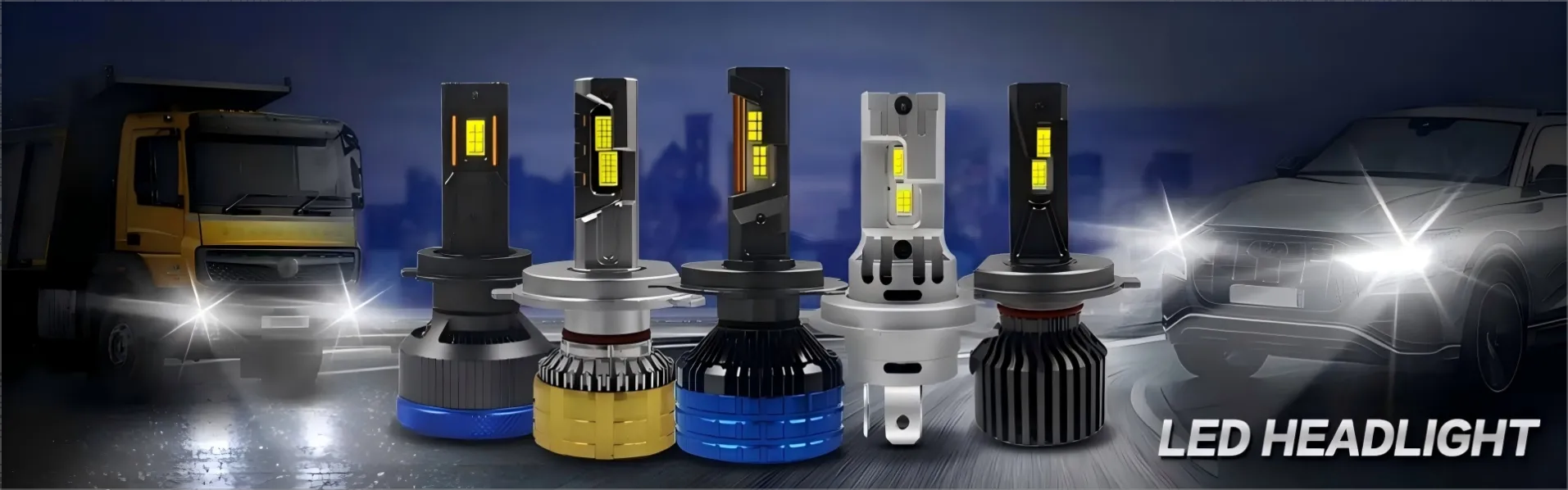
If you've searched for replacement headlights recently, you've probably noticed one thing.
Almost every product claims to be brighter, longer-lasting, and easier to install than traditional bulbs.
Some advertise incredibly high lumen ratings. Others focus on cooling systems, waterproof designs, or CANBUS compatibility. At first glance, they can all seem similar.
So, what exactly is an LED headlight bulb?
More importantly, why have LED headlights become the preferred lighting solution for millions of drivers and automotive parts distributors around the world?
In this guide, we'll explain how LED headlight bulbs work, how they compare with traditional lighting technologies, and what factors actually matter when choosing one. Whether you're replacing your vehicle's headlights or sourcing products for your business, understanding the basics will help you make more informed decisions.
What Is an LED Headlight Bulb?
An LED headlight bulb is an automotive lighting device that uses Light Emitting Diodes (LEDs) instead of a traditional filament to produce light.
Unlike halogen bulbs, which generate light by heating a tungsten filament until it glows, LEDs produce light when an electric current passes through a semiconductor material. This process converts electrical energy into visible light much more efficiently while generating less wasted heat.
According to the U.S. Department of Energy, LED technology is one of the most energy-efficient lighting solutions available today, offering significant improvements in efficiency and operational lifespan compared with older lighting technologies.
Because of these advantages, LED technology has become increasingly common not only in automotive headlights but also in street lighting, commercial buildings, industrial facilities, and consumer electronics.
Why Are More Vehicles Using LED Headlights?
Over the past decade, many vehicle manufacturers have gradually introduced LED headlights across more models.
Originally, LED lighting appeared mainly on premium vehicles. Today, it can be found on everything from compact passenger cars to pickup trucks, SUVs, motorcycles, agricultural equipment, and commercial vehicles.
Several factors have contributed to this shift.
Better Visibility
One of the biggest reasons drivers choose LED headlights is improved road visibility.
A well-designed LED headlight can produce a brighter, more focused beam than a conventional halogen bulb. Instead of scattering light in multiple directions, quality LED optics help direct more light onto the road where drivers actually need it.
However, brightness alone doesn't determine performance. Beam pattern, optical design, and correct installation all play equally important roles.
Lower Energy Consumption
Every electrical component inside a vehicle draws power from the charging system.
Because LEDs convert electricity into light more efficiently than halogen bulbs, they generally require less power to produce comparable or even higher illumination.
This reduced energy consumption is particularly valuable for electric vehicles, where maximizing battery efficiency is an ongoing engineering priority.
Longer Service Life
Traditional halogen bulbs gradually weaken as the filament deteriorates.
LEDs work differently.
Without a fragile filament that repeatedly heats and cools during operation, high-quality LED headlight bulbs may provide a significantly longer operating life under normal conditions.
Of course, actual lifespan depends on several factors, including:
- LED chip quality
- Driver design
- Thermal management
- Operating temperature
- Overall manufacturing quality
Rather than focusing only on advertised lifespan figures, experienced buyers often evaluate the overall engineering behind the product.
How Do LED Headlight Bulbs Work?
Although LED headlights may appear simple from the outside, several components work together to deliver consistent lighting performance.
Understanding these parts can make it much easier to compare different products.
LED Chips
The LED chips are the actual light source.
When electricity passes through the semiconductor inside each chip, photons are released, producing visible light.
The type of chip used can influence several aspects of performance, including:
- Brightness
- Light distribution
- Heat generation
- Efficiency
- Color consistency
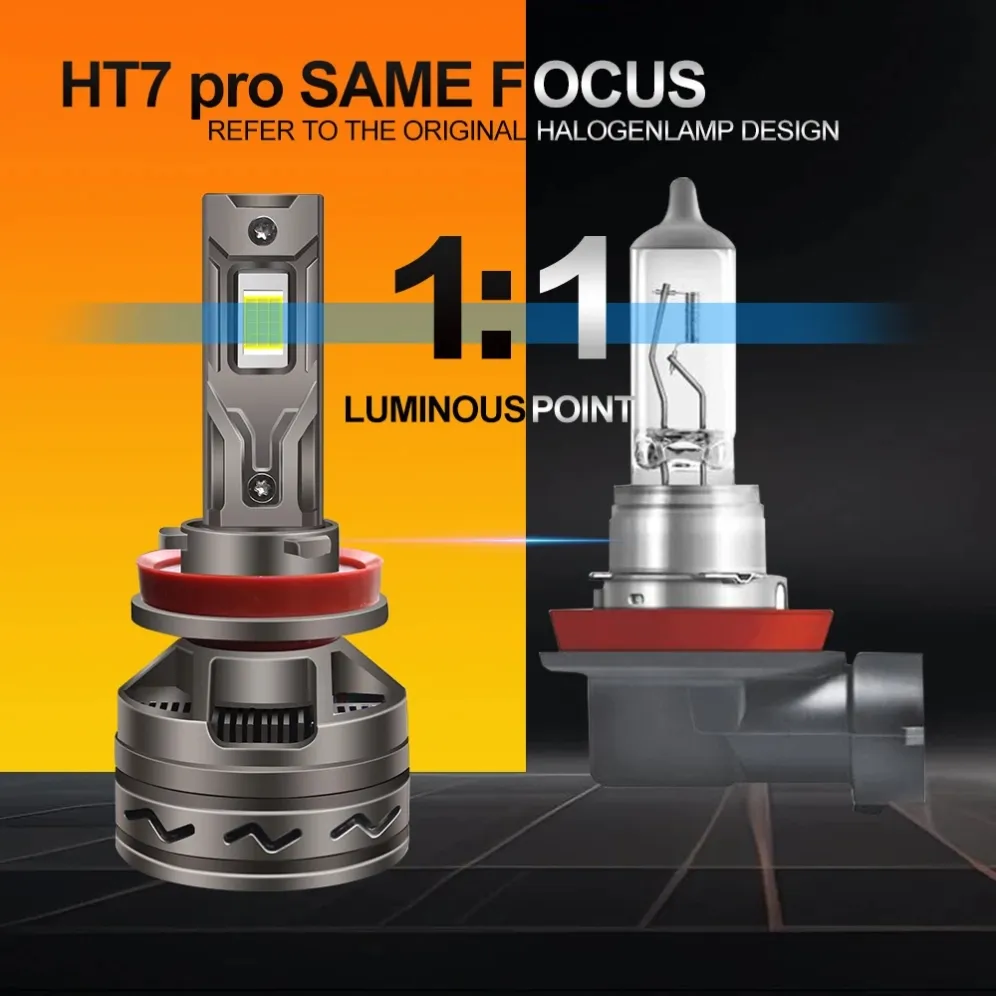
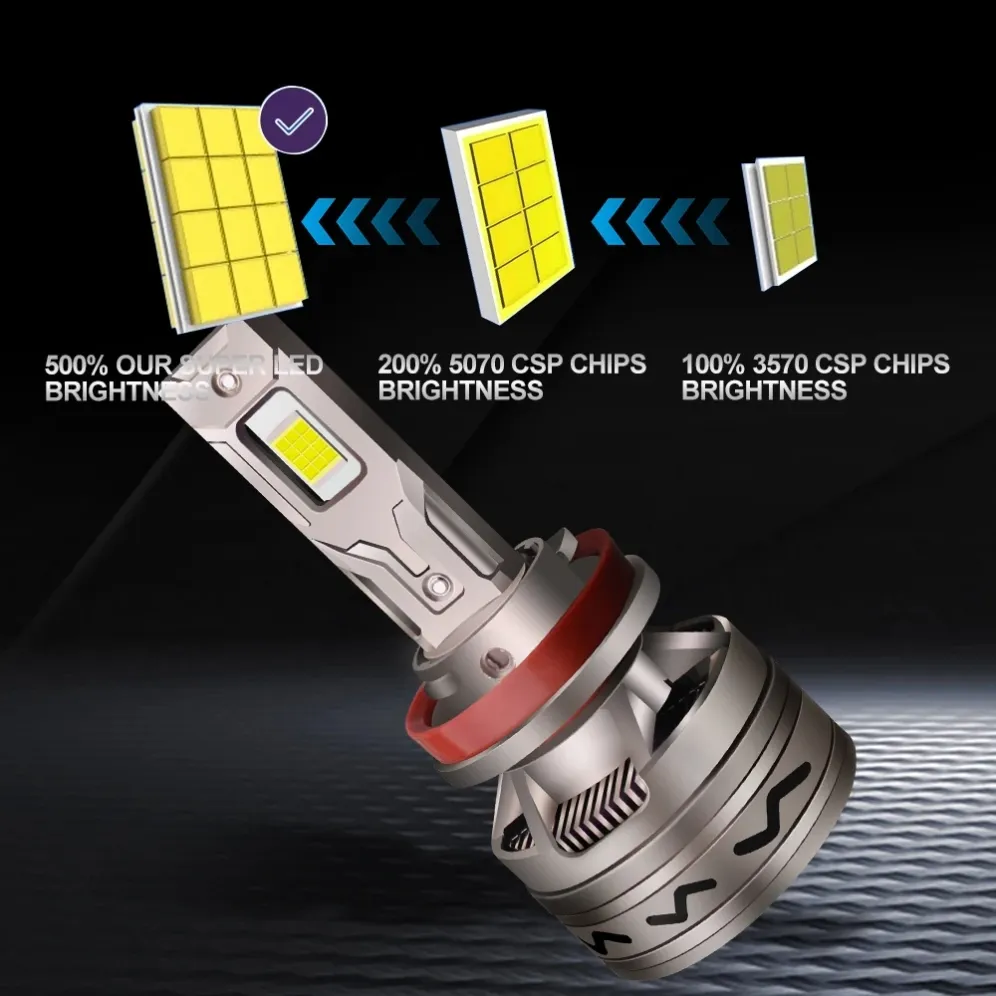
Modern automotive LED headlights commonly use CSP (Chip Scale Package) technology because it allows manufacturers to position the light source closer to the original halogen filament location. This design can help create a more accurate beam pattern while reducing glare for oncoming drivers.
LED Driver
The driver acts as the bulb's power management system.
Its job is to regulate electrical current and ensure the LEDs receive stable voltage under different driving conditions.
Vehicle electrical systems constantly experience voltage fluctuations during engine start-up, acceleration, and charging.
Without a properly designed driver, an LED bulb may experience flickering, unstable brightness, or compatibility issues with the vehicle's electronic system.
Many premium automotive LED headlights use a separate external driver, which allows for better heat management and more stable electrical performance compared with compact integrated designs.
Cooling System
One of the most overlooked aspects of LED headlight design is heat management.
Many people assume LEDs don't produce heat.
In reality, the LED chips themselves generate a considerable amount of heat during operation.
The difference is that LEDs produce far less infrared radiation than halogen bulbs, meaning heat remains concentrated around the semiconductor rather than being projected forward as light.
If this heat isn't removed efficiently, several problems may occur:
- Reduced brightness
- Color shift
- Shortened lifespan
- Driver instability
For this reason, many high-performance LED headlight bulbs combine several cooling technologies, including aluminum heat sinks, high-speed cooling fans, heat pipes, and intelligent thermal management systems to keep operating temperatures under control.
Why Beam Pattern Matters More Than Brightness
One of the biggest misconceptions in automotive lighting is that higher lumen ratings automatically produce better visibility.
In practice, that's not always true.
Imagine using a flashlight with extremely bright light but no focus.
Much of the light would scatter into the trees, road signs, or the eyes of oncoming drivers instead of illuminating the road ahead.
Vehicle headlights work the same way.
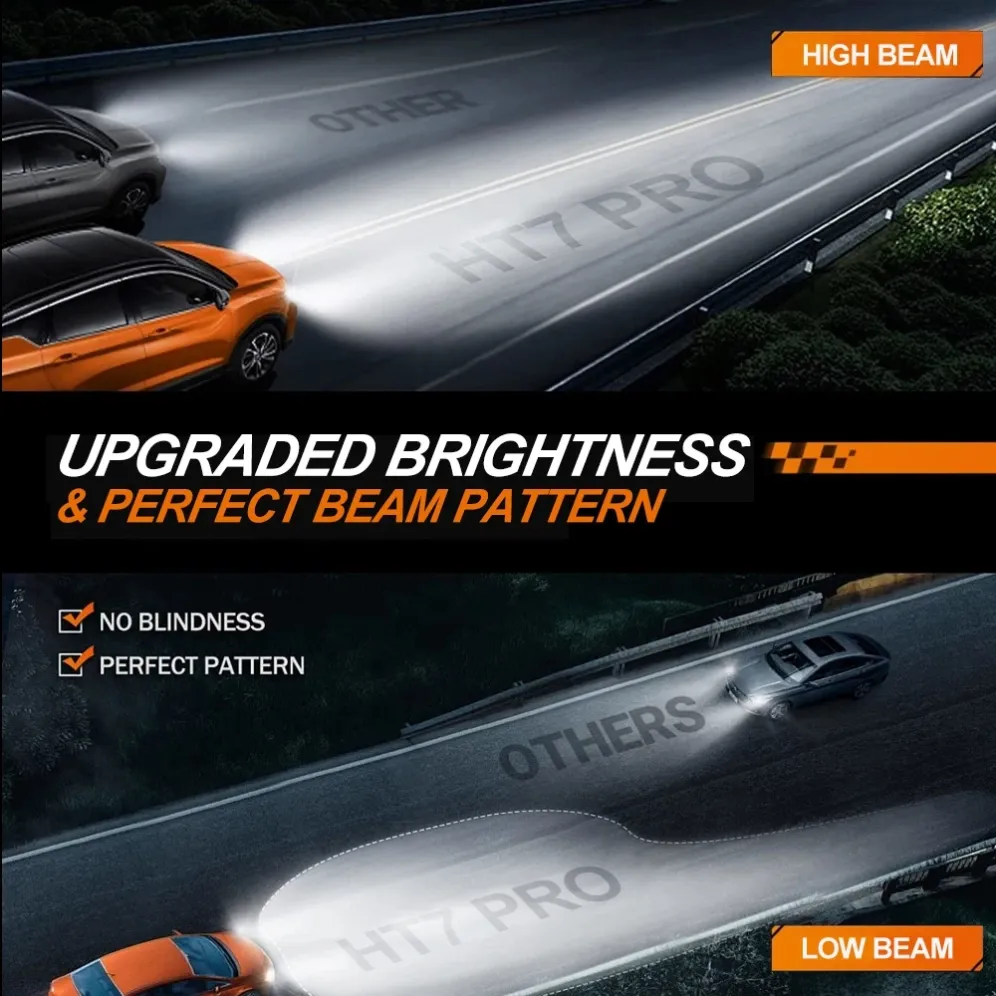
A properly engineered LED headlight should closely replicate the original position of the halogen filament inside the reflector or projector housing. When the light source sits in the correct location, it creates a sharp cutoff line and distributes light evenly across the road.
This is why experienced buyers often pay close attention to beam pattern rather than simply comparing lumen numbers.
According to the U.S. National Highway Traffic Safety Administration (NHTSA), correctly aimed headlights are essential for maximizing nighttime visibility while reducing glare for other road users.