
Sep 17, 2026
Single-Row vs Double-Row LED Light Bars: Which Should Distributors Stock?
Compare single-row and double-row LED light bars from a wholesale perspective, including size, appearance, mounting, product positioning and inventory strategy.
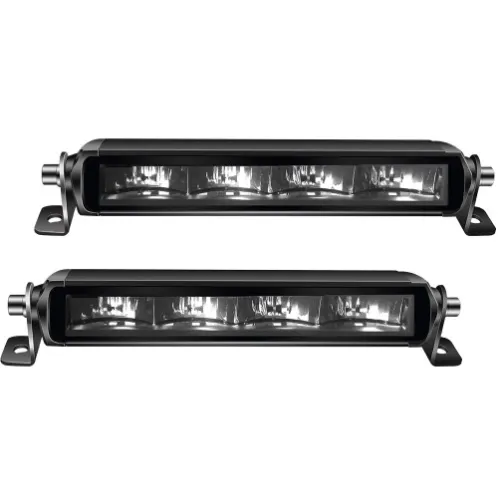
LED light bars can look simple from a distance.
Long housing.
LEDs.
Mounting brackets.
But product structure can make a major difference in how customers perceive and install them.
One of the most common distinctions is:
single-row
versus
double-row.
Neither design is automatically better.
They often serve different product positions.
What Is a Single-Row LED Light Bar?
A single-row light bar uses one primary row of LED optical elements across the housing.
This can create a slimmer profile.
Depending on the design, customers may prefer single-row products because of:
- low-profile appearance
- limited mounting space
- cleaner styling
- less visual bulk
This can make them attractive for certain 4x4, truck and accessory applications.
What Is a Double-Row LED Light Bar?
A double-row light bar contains two rows of LED optical elements.
This normally creates a deeper or taller housing structure.
Depending on the design, double-row products may be positioned toward customers who prefer:
- a more substantial appearance
- larger lighting assembly
- traditional off-road light-bar styling
The exact performance still depends on the LEDs, optics, driver and overall design.
Quick Comparison
Factor | Single Row | Double Row |
|---|---|---|
Typical profile | Slimmer | Larger |
Visual appearance | Cleaner / lower profile | More substantial |
Mounting-space demand | Often lower | Often higher |
Product positioning | Sleek / compact | Traditional off-road / heavy-duty appearance |
Performance determined by row count alone? | No | No |
Row count should not be treated as a direct measurement of performance.
Double Row Does Not Automatically Mean Twice the Light
This is a common misunderstanding.
Two rows of LEDs do not automatically mean:
twice the usable illumination.
Performance depends on:
- LED configuration
- optics
- current
- thermal management
- housing design
- beam pattern
Do not compare products only by counting LEDs.
Single Row Can Help With Tight Mounting Spaces
Customers may want to install a light bar:
- inside a grille
- under a bumper
- above a windshield
- on a roof rack
- on a truck accessory bracket
Available space matters.
A slimmer single-row design may work better where height is limited.
Double Row Can Have Strong Visual Appeal
Some off-road buyers actively want the more aggressive appearance of a larger double-row bar.
In accessory markets, appearance is part of the buying decision.
That means the distributor should consider:
technical application
and
customer styling preference.
Beam Type Still Matters More Than Row Count
Whether the light uses:
- spot
- flood
- combo
optics can have a major impact on how the light is used.
A double-row bar with the wrong beam for the customer may be less useful than a single-row product with suitable optics.
Always match beam to application.
Straight and Curved Are Separate Decisions
Another common confusion is treating:
single/double row
and:
straight/curved
as the same product choice.
They are separate design factors.
A product may be:
single-row straight
single-row curved
double-row straight
or another configuration.
Distributors should classify each feature clearly.
Which Customers Prefer Single Row?
Potential customers may include:
- modern 4x4 accessory retailers
- pickup owners
- customers needing discreet installations
- premium styling-oriented buyers
Actual demand depends on the local market.
Which Customers Prefer Double Row?
Potential customers may include:
- traditional off-road retailers
- truck accessory businesses
- customers wanting a larger visual presence
- certain equipment applications
Again, customer preference should be tested rather than assumed.
Do Not Stock Every Size in Both Designs Immediately
Suppose you stock:
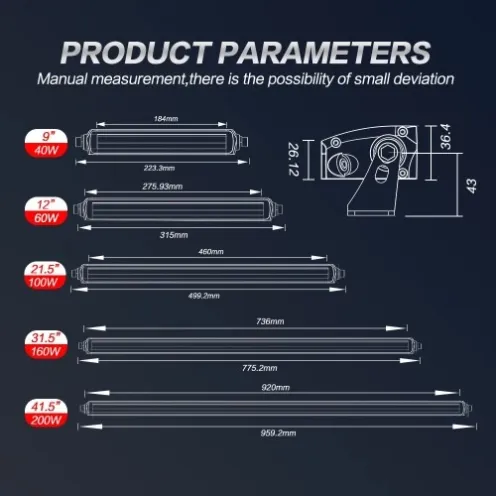
10 inch
20 inch
30 inch
40 inch
50 inch
in both:
single row
and
double row.
That already creates ten SKUs before considering:
straight
curved
beam pattern.
SKU complexity grows quickly.
Start with the combinations customers actually request.
Use A-B-C Inventory Planning
For example:
A Items
Your fastest-selling sizes and configurations.
B Items
Regular but lower-demand options.
C Items
Special-order or low-stock configurations.
This reduces dead stock.
Ask Retailers What Their Customers Mount
A useful question is:
Where are your customers installing the light bar?
The answer can reveal whether they need:
- slim design
- roof-mounted products
- bumper installations
- grille applications
Application gives more useful information than simply asking:
Single or double row?
Packaging and Freight Matter
Light bars can occupy significant carton volume.
Long products also need good transport protection.
When comparing products, ask for:
- carton dimensions
- quantity per carton
- packaging structure
- product length
Landed cost can influence which sizes are commercially attractive.
Samples Should Include Mounting Hardware
Do not evaluate only the lamp.
The customer installs a complete system.
Inspect:
- brackets
- bolts
- adjustment system
- wiring connection
- hardware quality
A good lamp with frustrating mounting hardware can still generate complaints.
Build a Focused Light Bar Range with Sunrise Auto Parts
Sunrise Auto Parts supplies LED light bars and related auxiliary lighting products for automotive aftermarket buyers.
Tell us your preferred sizes, customer applications and product styles so we can discuss suitable models for sample evaluation.
Related Resources
Ready to compare models side by side? Compare Single & Double Row Light Bars