
Logo, Labels, Barcodes and SKUs: A Private-Label Automotive Lighting Guide
Learn how private-label automotive lighting brands should manage logos, labels, barcodes and SKUs to reduce warehouse and repeat-order mistakes.
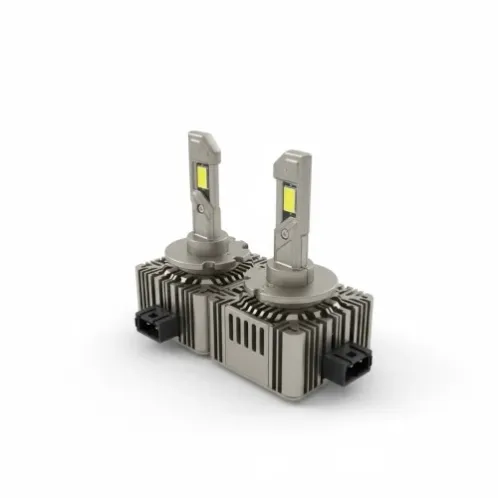
Private label often begins with one request:
Can you print my logo?
But a scalable brand needs more than a logo.
It also needs a system for identifying:
- product
- socket
- version
- packaging
- inventory
This is where labels, barcodes and SKUs become important.
Logo and Product Identity Are Different
Your logo tells customers:
Who is the brand?
The SKU tells your company:
Which exact product is this?
Do not use the logo as the only identifying information.
Two products can share the same brand while requiring completely different internal codes.
What Is an SKU?
SKU means Stock Keeping Unit.
It is an internal product identifier.
A good SKU can help identify:
- product family
- socket
- version
- color
- package
The exact coding system is up to the brand.
The important thing is that every SKU is unique enough for your inventory system.
Avoid Overly Complicated SKU Codes
An SKU such as:
SR-HT7P-H7-65K-V2
may be useful if every part of the code has a clear meaning.
But an extremely long code becomes hard to use.
The best SKU system is:
consistent
short enough to work
detailed enough to distinguish products.
Socket Should Be Easy to Identify
For LED headlight products, socket mistakes are expensive.
The label should clearly show:
H4
H7
H11
9005
9006
or another application.
Do not make warehouse staff search through a paragraph of packaging text to find the socket.
Use Separate SKU Codes for Different Sockets
If H4 and H7 are stocked separately, they should normally have separate identifiers.
For example:
Series A H4
Series A H7
Even if the bulb family is the same, the inventory item is different.
This makes:
purchasing
warehouse picking
sales reporting
reordering
more accurate.
Barcodes Help Retail and Warehouse Systems
A barcode provides machine-readable identification.
Depending on the buyer's business, it may be used for:
- inventory
- retail POS
- warehouse scanning
- e-commerce fulfillment
Before printing, confirm which barcode system your business or sales channel requires.
Do Not Invent Barcode Numbers Randomly
Professional retail channels may require specific barcode standards.
The brand owner should understand:
- who owns the number
- which system is used
- whether each SKU requires a unique code
Do not simply ask the printer to generate random numbers without understanding how they will be used.
Labels Can Solve Packaging Complexity
A buyer may want one common box for several socket versions.
This can reduce printing complexity.
Then a label can identify:
- socket
- SKU
- barcode
- product version
This can work well when managed carefully.
But incorrect labels can also create major warehouse mistakes.
Color Coding Can Help
Some brands use visual identification.
For example:
one label color for H4
another for H7.
This can make warehouse identification faster.
But color should support the written model code.
Do not rely on color alone.
Version Control Matters
Suppose the driver changes.
The outer box remains the same.
How will you identify old and new stock?
A version field can help.
For example:
V1
V2
or production batch information.
This becomes useful for:
- quality claims
- repeat orders
- customer support
Production Batch Identification
For larger brands, batch information can improve traceability.
A batch code may connect the product with:
- production date
- shipment
- supplier batch
- inspection
If a problem occurs later, the brand can investigate more accurately.
Keep Barcode and SKU Information in the Product Master Sheet
Do not manage barcode numbers separately in someone's personal notebook.
The Product Master Sheet can contain:
Model
Socket
SKU
Barcode
Packaging Version
Current Status
This becomes the central reference.
E-Commerce Needs Clean Product Identification
Online channels can create additional complexity.
The same product may have:
- internal SKU
- platform listing ID
- barcode
- supplier model
Keep these fields separate.
Do not replace your internal SKU every time a marketplace changes its identifier.
Avoid Renaming Products Constantly
Some brands change model names every year for marketing.
That can confuse:
- repeat customers
- distributors
- warehouse staff
- suppliers
If the product changes significantly, a new model may make sense.
If only the marketing campaign changes, consider keeping the core SKU stable.
Check Labels Before Mass Production
Before producing thousands of labels, verify:
- socket
- spelling
- barcode
- SKU
- color
- dimensions
A tiny label mistake can affect an entire order.
The Goal Is Traceability
A professional private-label system should allow you to answer:
What product is this?
Which socket?
Which version?
Which batch?
Which packaging?
That is what good identification achieves.
Discuss Private-Label Product Identification with Sunrise Auto Parts
Sunrise Auto Parts supplies automotive LED lighting products for wholesalers and private-label buyers.
If you are preparing branded products, confirm the product model, socket structure and packaging requirements before final production.
Review the LED Headlight Bulbs range when planning a focused private-label assortment.