
Aug 29, 2026
How to Test a New Automotive Lighting Market in 90 Days Without Overstocking
A 90-day market-entry framework for automotive lighting distributors to test products, collect customer feedback and build inventory without overstocking.
Entering a new market creates an uncomfortable problem.
You need inventory to generate sales.
But you need sales data to know what inventory to buy.
Many distributors solve this by guessing.
They order too many products.
Then six months later, half of the warehouse is still full.
A better approach is to treat the first 90 days as a controlled market test.
Days 1–15: Understand the Vehicle Fleet
Do not start with products.
Start with vehicles.
Research:
- popular brands
- common models
- vehicle age
- passenger vs commercial vehicles
- motorcycle importance
- local modification culture
Then identify likely lighting demand.
For headlight bulbs, map:
- H4
- H7
- H11
- 9005
- 9006
- other important local applications
The goal is creating a hypothesis.
Not a huge purchase order.
Days 1–15: Interview 10 Real Customers
Talk to:
- parts retailers
- workshops
- retrofit shops
- used-car dealers
- fleet operators
Ask:
What sells?
What customers complain about?
Which models are difficult to find?
Which price level moves fastest?
You will learn more from ten good conversations than from fifty random supplier recommendations.
Days 16–30: Choose a Small Product Test
Select a limited number of products.
For example:
Headlight Bulbs
Several core sockets.
One Mini Series
To test installation-focused demand.
One Higher-Performance Series
To test premium demand.
One Auxiliary Category
If the market supports off-road, motorcycle or commercial applications.
Keep the first assortment understandable.
Days 16–30: Order Samples First
Do not jump directly into commercial stock.
Test samples.
Check:
- installation
- beam
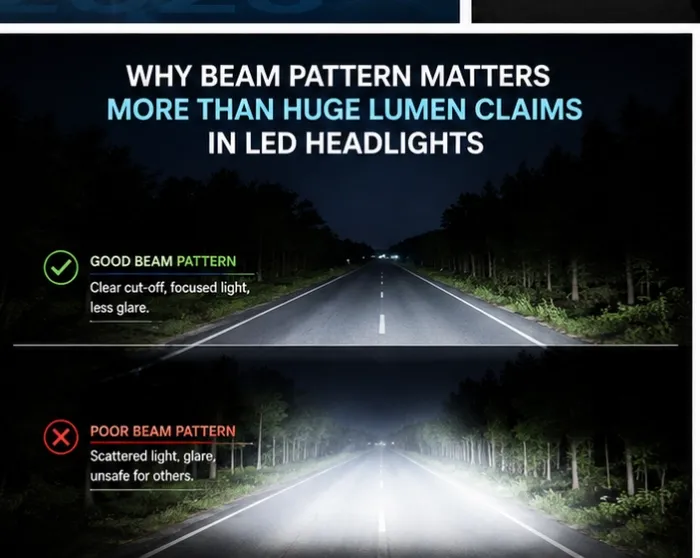
- CANBUS behavior where relevant
- product construction
- packaging
- local customer response
Give samples to trusted installers.
Their feedback can prevent expensive mistakes.
Days 31–45: Build the First Commercial Order
Now use the evidence.
Do not order the same quantity of every SKU.
Allocate more inventory to applications with stronger expected demand.
Keep experimental products small.
The purpose of the first order is learning while selling.
Not maximizing volume.
Days 31–45: Define the Product Positioning
Every series needs a role.
For example:
Value
Price-sensitive customer.
Mainstream
Core everyday product.
Premium
Higher-positioned upgrade.
Specialist
CANBUS, projector or auxiliary product.
If you cannot explain why a SKU exists, reconsider buying it.
Days 46–60: Launch Through Selected Customers
Do not immediately distribute everywhere.
Start with a small number of retailers or workshops.
Explain that you are testing a new line.
Ask them to report:
- sales
- installation issues
- customer questions
- returns
- requested models
This creates a feedback loop.
Days 46–60: Track Every Inquiry
Create a simple spreadsheet.
Record:
Date
Customer
Vehicle
Requested product
Socket
Quantity
Did we have stock?
Did the sale happen?
This lost-sales data becomes extremely valuable.
Days 61–75: Analyze Sell-Through
After several weeks, classify products.
Strong
Selling quickly.
Increase.
Promising
Selling but slowly.
Maintain.
Weak
Little demand.
Reduce.
Problem Product
Generating complaints.
Investigate before reordering.
Do not let emotion influence the decision.
Days 61–75: Analyze Returns
Record why products come back.
Possible reasons:
- wrong fitment
- installation difficulty
- CANBUS
- beam complaint
- quality defect
- customer expectation
This tells you whether the problem is:
product
application
sales training
or customer selection.
Days 76–90: Place the Second Order Based on Evidence
The second purchase order should be smarter than the first.
Increase:
fast sockets
strong product tiers
proven applications.
Reduce:
slow models
duplicated products
problem SKUs.
This is how inventory quality improves.
Do Not Expand Too Fast
One successful product does not mean you need 30 more products immediately.
Depth can be more valuable than width.
It may be better to become known for:
five reliable, available products
than:
fifty products that are constantly out of stock or poorly understood.
Build a 90-Day Dashboard
Track:
- sales
- gross margin
- inventory turnover
- inquiry count
- return rate
- stockouts
- customer feedback
At Day 90, decide:
Continue
Expand
Modify
Stop
That is a real market-entry decision.
The Goal Is Learning Cheaply
A new market is uncertain.
You cannot remove uncertainty.
You can reduce the cost of learning.
Samples, small mixed orders and customer interviews let you make mistakes while they are still cheap.
That is much better than discovering the truth after importing a container.
Test Your Product Range with Sunrise Auto Parts
Sunrise Auto Parts supplies automotive LED headlight bulbs, projector lenses, work lights and auxiliary lighting products for wholesale buyers.
Tell us your target market, vehicle applications and test-order goals, and we can discuss a focused product mix for sample and initial market evaluation.
CTA:
Plan Your First Automotive Lighting Test Ord
Related Resources
How to Test LED Automotive Lighting Samples Before Bulk Order: https://www.chuxuparts.com/posts/how-to-test-led-automotive-lighting-samples-before-bulk-order
Plan Your First Automotive Lighting Test Order
Contact Sunrise Auto Parts: https://www.chuxuparts.com/contactEntering a new market creates an uncomfortable problem.
You need inventory to generate sales.
But you need sales data to know what inventory to buy.
Many distributors solve this by guessing.
They order too many products.
Then six months later, half of the warehouse is still full.
A better approach is to treat the first 90 days as a controlled market test.
Days 1–15: Understand the Vehicle Fleet
Do not start with products.
Start with vehicles.
Research:
- popular brands
- common models
- vehicle age
- passenger vs commercial vehicles
- motorcycle importance
- local modification culture
Then identify likely lighting demand.
For headlight bulbs, map:
- H4
- H7
- H11
- 9005
- 9006
- other important local applications
The goal is creating a hypothesis.
Not a huge purchase order.
Days 1–15: Interview 10 Real Customers
Talk to:
- parts retailers
- workshops
- retrofit shops
- used-car dealers
- fleet operators
Ask:
What sells?
What customers complain about?
Which models are difficult to find?
Which price level moves fastest?
You will learn more from ten good conversations than from fifty random supplier recommendations.
Days 16–30: Choose a Small Product Test
Select a limited number of products.
For example:
Headlight Bulbs
Several core sockets.
One Mini Series
To test installation-focused demand.
One Higher-Performance Series
To test premium demand.
One Auxiliary Category
If the market supports off-road, motorcycle or commercial applications.
Keep the first assortment understandable.
Days 16–30: Order Samples First
Do not jump directly into commercial stock.
Test samples.
Check:
- installation
- beam
- CANBUS behavior where relevant
- product construction
- packaging
- local customer response
Give samples to trusted installers.
Their feedback can prevent expensive mistakes.
Days 31–45: Build the First Commercial Order
Now use the evidence.
Do not order the same quantity of every SKU.
Allocate more inventory to applications with stronger expected demand.
Keep experimental products small.
The purpose of the first order is learning while selling.
Not maximizing volume.
Days 31–45: Define the Product Positioning
Every series needs a role.
For example:
Value
Price-sensitive customer.
Mainstream
Core everyday product.
Premium
Higher-positioned upgrade.
Specialist
CANBUS, projector or auxiliary product.
If you cannot explain why a SKU exists, reconsider buying it.
Days 46–60: Launch Through Selected Customers
Do not immediately distribute everywhere.
Start with a small number of retailers or workshops.
Explain that you are testing a new line.
Ask them to report:
- sales
- installation issues
- customer questions
- returns
- requested models
This creates a feedback loop.
Days 46–60: Track Every Inquiry
Create a simple spreadsheet.
Record:
Date
Customer
Vehicle
Requested product
Socket
Quantity
Did we have stock?
Did the sale happen?
This lost-sales data becomes extremely valuable.
Days 61–75: Analyze Sell-Through
After several weeks, classify products.
Strong
Selling quickly.
Increase.
Promising
Selling but slowly.
Maintain.
Weak
Little demand.
Reduce.
Problem Product
Generating complaints.
Investigate before reordering.
Do not let emotion influence the decision.
Days 61–75: Analyze Returns
Record why products come back.
Possible reasons:
- wrong fitment
- installation difficulty
- CANBUS
- beam complaint
- quality defect
- customer expectation
This tells you whether the problem is:
product
application
sales training
or customer selection.
Days 76–90: Place the Second Order Based on Evidence
The second purchase order should be smarter than the first.
Increase:
fast sockets
strong product tiers
proven applications.
Reduce:
slow models
duplicated products
problem SKUs.
This is how inventory quality improves.
Do Not Expand Too Fast
One successful product does not mean you need 30 more products immediately.
Depth can be more valuable than width.
It may be better to become known for:
five reliable, available products
than:
fifty products that are constantly out of stock or poorly understood.
Build a 90-Day Dashboard
Track:
- sales
- gross margin
- inventory turnover
- inquiry count
- return rate
- stockouts
- customer feedback
At Day 90, decide:
Continue
Expand
Modify
Stop
That is a real market-entry decision.
The Goal Is Learning Cheaply
A new market is uncertain.
You cannot remove uncertainty.
You can reduce the cost of learning.
Samples, small mixed orders and customer interviews let you make mistakes while they are still cheap.
That is much better than discovering the truth after importing a container.
Test Your Product Range with Sunrise Auto Parts
Sunrise Auto Parts supplies automotive LED headlight bulbs, projector lenses, work lights and auxiliary lighting products for wholesale buyers.
Tell us your target market, vehicle applications and test-order goals, and we can discuss a focused product mix for sample and initial market evaluation.
CTA:
Plan Your First Automotive Lighting Test Orde
Related Resources
LED lighting products: https://www.chuxuparts.com/productsLED sample testing guide: https://www.chuxuparts.com/posts/how-to-test-led-automotive-lighting-samples-before-bulk-orderVehicle-in-Operation Inventory Planning: https://www.chuxuparts.com/posts/vehicle-in-operation-data-led-headlight-inventory-planningReduce Dead Stock: https://www.chuxuparts.com/posts/reduce-dead-stock-automotive-lighting-inventorySupplier Scorecard: https://www.chuxuparts.com/posts/automotive-lighting-supplier-scorecardContact Sunrise Auto Parts: https://www.chuxuparts.com/contact